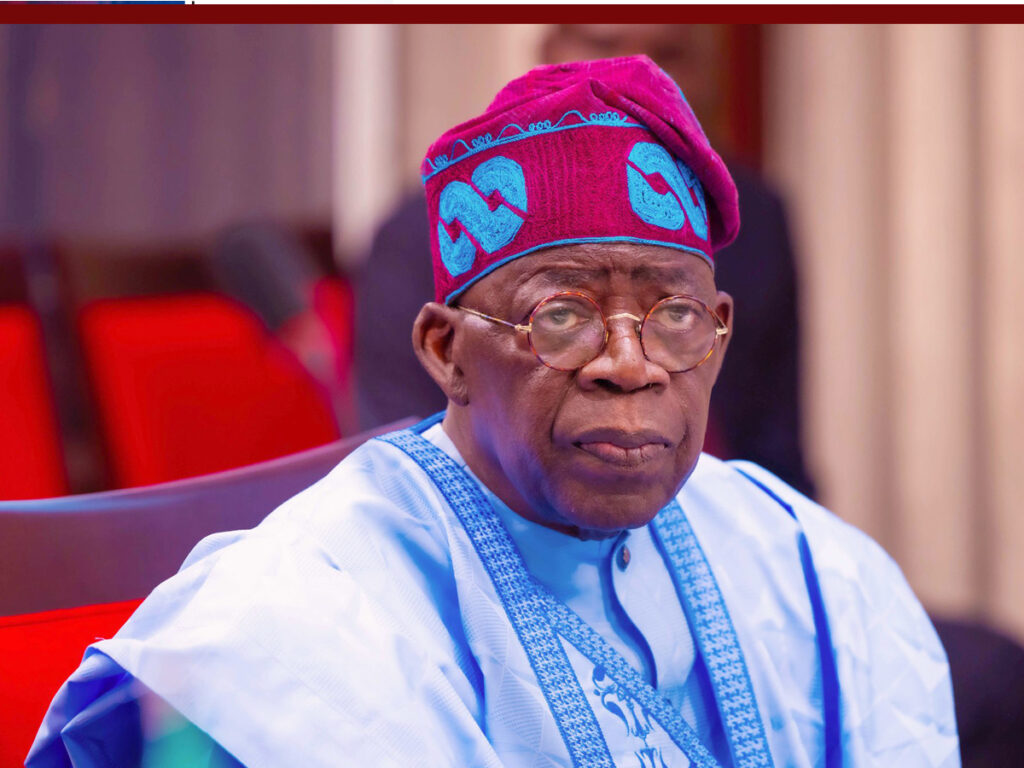

President Bola Ahmed Tinubu has reiterated his directive for police officers currently assigned to protect Very Important Persons (VIPs) to be withdrawn and redeployed to areas facing insecurity, while instructing the Nigeria Security and Civil Defence Corps (NSCDC) to assume their protective duties.
Speaking minutes before presiding over the Federal Executive Council at the State House in Abuja on Wednesday, Tinubu expressed frustration at the slow implementation of the order.
He emphasised that any official facing challenges in compliance should seek clearance from the Inspector-General of Police (IGP), Kayode Egbetokun.
“I honestly believe in what I said. It should be effected. If you have any problem because of the nature of your assignment, contact the IGP and get my clearance,” he stated.
The President instructed the Minister of Interior, Dr Olubunmi Tunji-Ojo, to liaise with the IGP and the NSCDC to ensure that withdrawing police officers would not leave VIPs exposed.
Tinubu also directed the National Security Adviser, Nuhu Ribadu, and the Department of State Services (DSS) to provide further guidance, form a review committee, and oversee the transition.
He framed the directive as part of a broader response to rising insecurity, noting that Nigeria faces challenges of kidnapping and terrorism.
“We need all the forces that we can utilise. I know some of our people are exposed. I understand that we have to make exceptional provision, and civil defence personnel are equally armed,” Tinubu said.
In addition to the VIP security directive, the president charged Vice President Kashim Shettima with using the National Economic Council (NEC) to identify and rehabilitate grazing reserves into ranches and livestock settlements.
He stressed that this measure aims to reduce farmer-herder conflicts while promoting economic development.
“We must eliminate the possibility of conflicts and turn the livestock reform into economically viable development. The opportunity is there. Let us utilise it,” Tinubu said, and instructed that forest guards be armed, reinforcing rural security.
The order follows a similar directive issued on 23–24 November 2025, during a security meeting with service chiefs, the IGP, and the DSS. The November order required police personnel providing VIP protection to concentrate on their core duties, including investigations, patrols, and community policing.
Following the directive, IGP Egbetokun confirmed that 11,566 police officers had been recalled and redeployed to underserved areas. Police authorities have since begun deploying these officers to high-risk communities and highways.
While some Nigerians welcomed the initiative, others have expressed concerns over uneven implementation and capacity issues.
Senator Ali Ndume, representing Borno South Senatorial District, argued that lawmakers are being unfairly deprived of security, while ministers, business leaders, and political families continue to enjoy extensive police protection.
Ndume highlighted instances of police officers attached to the wives and children of officials, describing it as inappropriate and “insulting.” The Senate has tasked its Committee on Police Affairs to investigate the matter.
Former DSS Director Mike Ejiofor warned that the NSCDC lacks sufficient personnel and specialised training to assume VIP protection duties. Retired Assistant Inspector General of Police Abutu Yaro similarly cautioned that abrupt redeployment could create security gaps if not carefully managed.
Nobel Laureate Wole Soyinka criticised the disproportionate number of armed security personnel accompanying Seyi Tinubu, the President’s son. At the 20th Wole Soyinka Centre for Investigative Journalism Awards in Lagos, Soyinka recounted seeing a heavily armed detail, describing it as “sufficient to take over a small country neighbouring city.”
A video of his remarks went viral, sparking debate about the allocation of security resources in Nigeria.