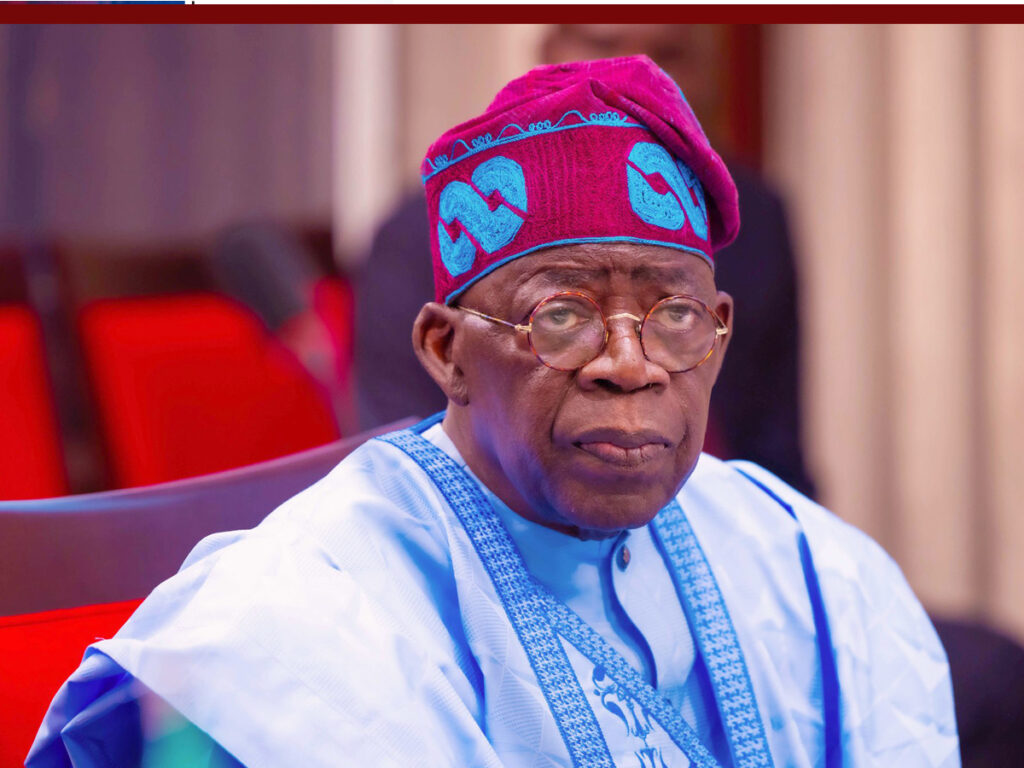

President Bola Tinubu has declared insecurity and poverty as national emergencies, warning that both challenges pose serious threats to Nigeria’s workforce, productivity, and overall economic stability.
The declaration was made on Thursday as the country joined the rest of the world to commemorate Workers’ Day, highlighting the urgency of addressing the nation’s socio-economic pressures.
The president described insecurity and widespread poverty as twin crises undermining livelihoods and weakening confidence in the economy, noting that they directly affect the ability of citizens to engage in meaningful and productive work.
He, however, assured Nigerians that his administration has already rolled out measures aimed at tackling these issues while creating employment opportunities.
Among such initiatives, Tinubu pointed to the Community Protection Guards scheme, which he said has provided jobs for about 45,000 young Nigerians tasked with safeguarding communities. He also emphasised that efforts to curb insecurity are being implemented alongside programmes designed to stimulate economic growth and job creation.
Represented by the Secretary to the Government of the Federation, George Akume, at the May Day celebration held at Eagle Square in Abuja, the president aligned his message with the International Labour Organisation’s Decent Work Agenda. He stressed that decent work cannot thrive in an environment where workers feel unsafe or where wages are insufficient to meet basic needs.
Tinubu noted that his administration’s expanded cash transfer programme under the Renewed Hope Agenda has reached approximately 15 million vulnerable households, lifting an estimated 7.5 million Nigerians out of poverty.
He added that major infrastructure projects, including the Lagos-Calabar Coastal Highway and the Ajaokuta-Kaduna-Kano Gas Pipeline, have collectively generated over 600,000 jobs nationwide.
Describing insecurity and poverty as “hydra-headed challenges,” the president said their designation as national emergencies reflects their far-reaching impact on economic growth and citizens’ welfare. He maintained that targeted interventions across agriculture, infrastructure, and social protection are laying the groundwork for inclusive development.
He highlighted agricultural initiatives such as the National Agricultural Growth Scheme and Agro-pocket programme, dry season farming, and mechanisation efforts as key drivers of food security and rural employment. Tinubu also disclosed that about 10,000 agro-rangers have been deployed across 19 states to protect farmers and agricultural investments from banditry.
On workers’ welfare, the president said his administration has implemented a new national minimum wage, cleared pension arrears, and reinstated gratuity payments from January 2026. He added that over 800,000 informal sector workers have been enrolled in the micro pension scheme, while small businesses are benefiting from a N200 billion support fund.
Tinubu urged labour unions, particularly the Nigeria Labour Congress (NLC) and the Trade Union Congress (TUC), to prioritise dialogue over industrial action, stating that strikes should be a last resort. He called for sustained collaboration between government and labour to achieve lasting reforms.
In response, labour leaders expressed deep concern over the state of the nation, warning that insecurity and economic hardship have reached alarming levels.
NLC President Joe Ajaero and TUC President Festus Osifo said Nigeria is facing a crisis that threatens both lives and livelihoods, citing reports that nearly 2,000 people were killed in the first quarter of 2026.
They argued that economic growth figures have not translated into improved living conditions, describing the country’s poverty rate as alarmingly high. The labour leaders also criticised what they called policies favouring a small elite, insisting that the majority of Nigerians continue to struggle with rising costs and declining purchasing power.
Osifo further warned that increasing the minimum wage alone would not solve workers’ challenges unless the value of the naira is stabilised. He stressed that wage adjustments must go hand in hand with economic reforms to improve purchasing power, noting that even a significant wage increase would have limited impact if inflation persists.
Meanwhile, Senate President Godswill Akpabio commended Nigerian workers for their resilience and patriotism despite prevailing challenges. He assured that the National Assembly remains committed to enacting policies that promote fair wages, safer working conditions, and job creation.