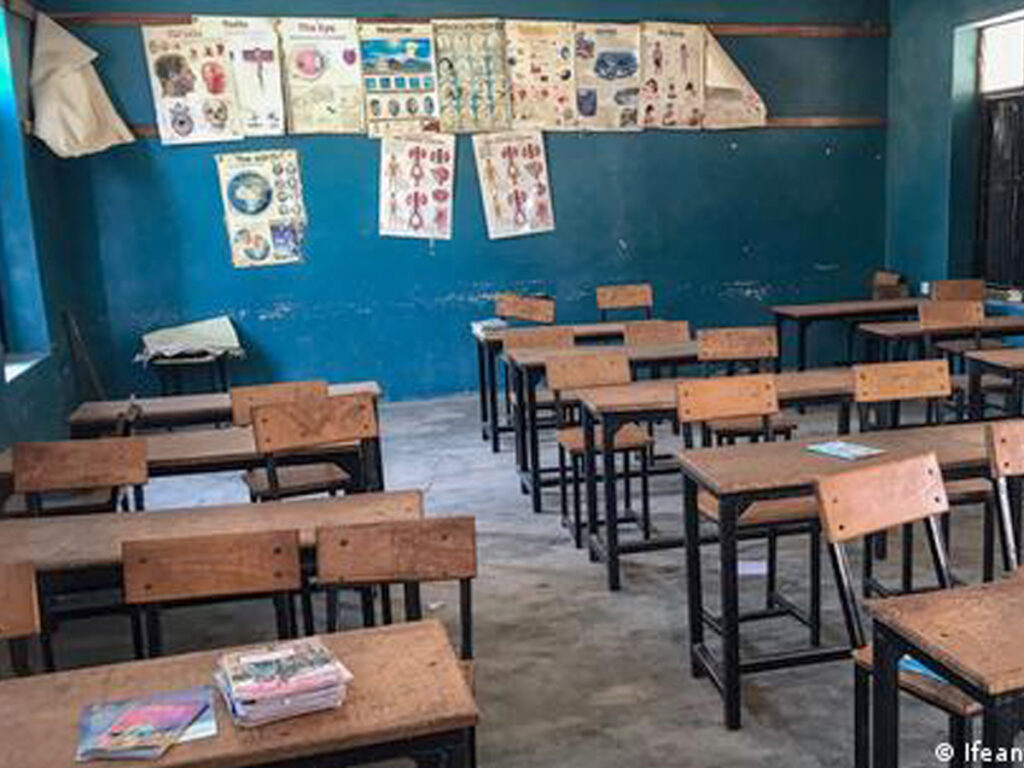

At the time of writing, over 300 primary and secondary school students of St. Mary’s Catholic School in Papiri, Niger State, both boys and girls, remain in the hands of armed bandits deep in the forest. They have been held captive since their abduction from their school on November 12. This follows the earlier kidnapping of 25 girls from Maga Girls’ Secondary School by terrorists, who were later released.
Recently, Nuhu Ribadu, the Senior Special Adviser to the President on Security, stated that preparations are underway to rescue the students at any moment.
This situation raises serious concern — not only for the pupils and the students caught in suffering and uncertainty but also for their parents and teachers, who live in constant anxiety over the fate of their children. Reports indicate that a father lost his life following the kidnapping of his three children from the primary and secondary schools in Papiri.
Since 2014, when Boko Haram abducted more than 200 schoolgirls from Chibok, a total of 1,880 students have been kidnapped across different parts of the country, with the majority being girls.
Unfortunately, the government has failed to implement stringent measures to prevent the recurrence of such incidents. Most schools remain in precarious conditions, neglected and unsafe. Many schools near forests or in remote areas lack adequate security, while some located along highways lack protective fencing. Dormitories offer no real protection against bandits. Even where some form of security exists, it is often insufficient, with poorly trained guards who lack arms or the means to deter attackers.
This has understandably frightened many parents, prompting them to hastily withdraw their children from boarding schools after the attack on St. Mary’s Catholic School in Papiri, less than a week after the assault on the girls’ student in GGSS Maga, Kebbi state. State governments and Ministries of Education have swiftly moved to close schools in affected states — such as Sokoto, Zamfara, Katsina, Niger, Bauchi, Taraba, and Plateau — just as many schools were preparing for exams.
A pressing question emerges: How will the government provide security for our children’s schools? It is well known that there are insufficient security personnel to fight bandits in their forest camps. This shortage led to the withdrawal of security guards from politicians and government officials, as well as the redeployment of military personnel blocking national highways to the forest areas to fight the bandits. Still, it is impossible to keep children confined at home with no education, as no one knows when this security threat will end.
Where, then, is the progress on the government’s new Safe Schools Initiative, launched in some states facing security challenges? Investigation reveals that the policy aimed to ensure enhanced school security, provide early warning signs of security threats, and rehabilitate damaged school infrastructure. Yet, during this critical period of insecurity in the education sector, the programme has not made any noticeable impact in the troubled regions.
In Plateau State, implementation of the initiative has been delayed, leading to a lack of effective security measures. Funding is limited to fencing some of the schools that remain open. Efforts are ongoing to collaborate with police, the NSCDC, and vigilante groups to protect boarding schools in villages and local government areas.
There is also discussion about converting some boarding schools into day schools. Other states should take lessons from these efforts or design alternative solutions suited to their specific conditions.
Another key recommendation is to strengthen and establish joint committees between local communities, school authorities, teachers, parents’ associations (PTA), alumni groups, and other local influencers — commonly called School-Based Management Committees (SBMC). These committees can advise and raise funds to support security arrangements for schools.
It is unrealistic to passively wait for the government alone to secure our schools. This is a major challenge that requires collective action. Parents, school leaders, security agencies, and governments must work together to encourage and support security personnel dedicated to protecting our children and us. The issue is critical, and the government cannot handle it alone.
Abba Abubakar Yakubu, a multimedia journalist and a public affairs analyst, writes from Jos, Plateau State