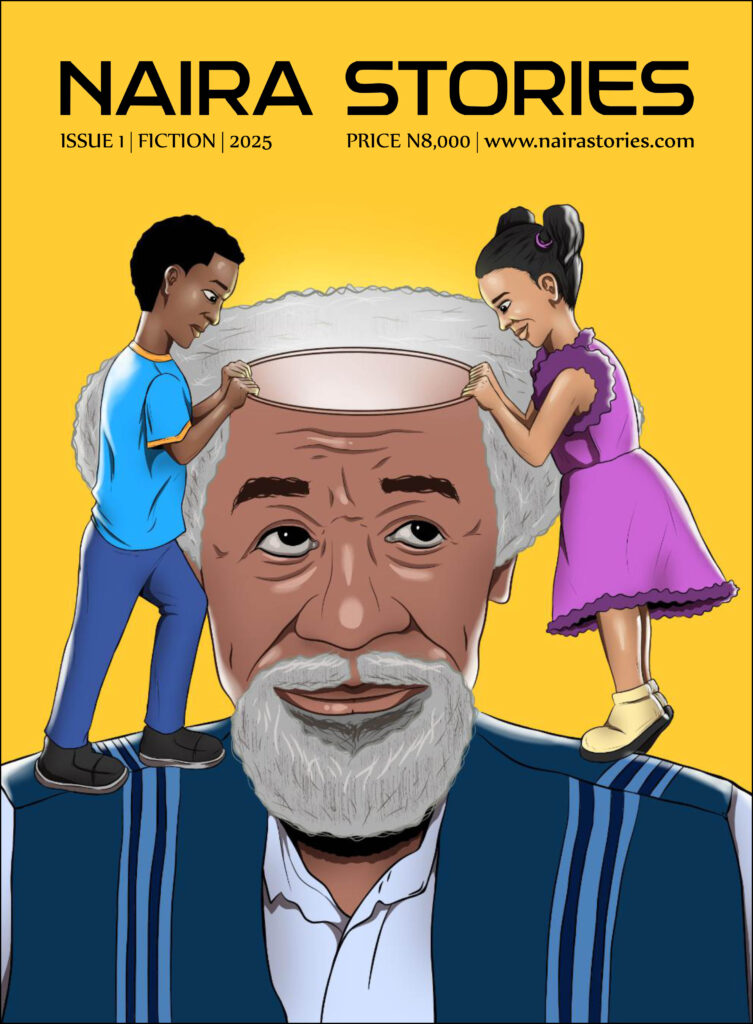
The stories that I edited for Naira Stories Magazine are funny, macabre, and bizarre. The stories offer different views into sociological concerns pertinent to Nigeria, though never in a heavy-handed way. The craft is solid, too.
Each author shapes words in their own unique manner. I found myself surprised, even disturbed, and deeply engaged. The sociopolitical undercurrents emerge naturally, through narrative, rather than as overt commentary. I enjoyed reading the stories.
For the lessons I learnt from some of the stories, I would not want to be didactic here or appear as a moralist, as it risks turning literature into a kind of soapbox or sermon. That is often where the pressure to make literature always ‘political’ or ‘preachy’ stems from.
Stories can carry weight and meaning without waving a flag. Rather, I would like readers to enjoy the stories, reflect, and probe their depths themselves.
Fiction provides a powerful lens for examining societal issues, not by preaching, but by making abstract problems tangible through character and narrative. It fosters empathy, challenges assumptions, and sparks dialogue about complex social realities. Stories can subtly reshape perspectives.
Literary magazines, especially online platforms, are transforming Nigeria’s reading culture by amplifying diverse voices that mirror our lived experiences. Hosting readings, workshops, and competitions can deepen appreciation for literature as both craft and cultural memory.
Given the short deadline, it was tough editing the stories, I must say, but equally pleasant because of the quality of some of the stories.
Now that the stories are published, I would recommend that Naira Stories actively promote the magazine to reach a wider audience.
Tọ́pẹ́-ẸniỌbańkẹ́ Adégòkè is an editor, traveller, literary critic, and writer from Ibadan, Nigeria. Tọ́pẹ́-ẸniỌbańkẹ́ has written dozens of reviews published on Wawa Book Review, Africa in Words, and others. Also, his poems, essays, and interviews have appeared in Aké Review, Agbowó, A Long House, Arab Lit Quarterly, Africa in Dialogue, and others. He is a fellow of the LOATAD 2024 Black Atlantic Residency.