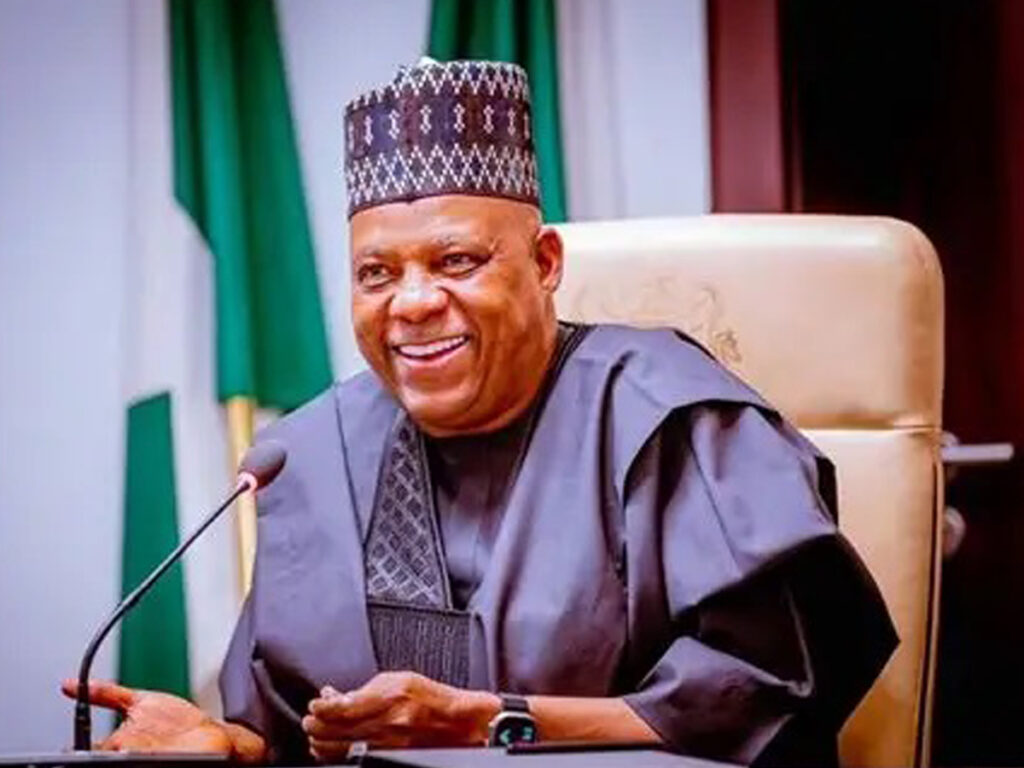

Vice President Kashim Shettima on Monday restated Nigeria’s commitment to strengthening peace, security, and stability across West Africa as he represented President Bola Ahmed Tinubu at the inauguration of President Alassane Ouattara in Abidjan, Côte d’Ivoire.
Shettima, who conveyed President Tinubu’s congratulations to the Ivorian leader, said Nigeria would continue to deepen cooperation with Côte d’Ivoire, especially in agriculture, trade, and other areas that promote regional economic growth.
He expressed confidence in President Ouattara’s new mandate and assured that the Tinubu administration remains dedicated to expanding partnerships that support prosperity and security in the sub-region.
The ceremony, held at the Presidential Palace, brought together several heads of state and international dignitaries, including the presidents of South Africa, Liberia, Senegal, Gambia, Angola and Ghana, as well as former Nigerian President Goodluck Jonathan.
The United States attended through a presidential delegation led by Under Secretary of State for Economic Affairs, Jacob Helberg. ECOWAS representatives and other global officials were also present.
In his inaugural message, President Ouattara thanked all visiting leaders for their solidarity and promised to continue focusing on the wellbeing of Ivorian citizens while strengthening diplomatic ties for mutual benefit.
On the sidelines of the inauguration, the World Bank praised Nigeria’s ongoing reforms and pledged stronger partnership with the country, particularly in energy development, job creation and projects aimed at advancing the education and empowerment of girls.
During a meeting with Shettima, the World Bank’s Managing Director of Operations, Anna Bjerde, said the institution was increasing its support for Nigeria’s energy sector, with plans aimed at providing electricity access to about four million people.
Bjerde also highlighted commitments to deepen programmes that promote gender inclusion and girl-child development.
Responding, Shettima outlined the impact of the Tinubu administration’s reforms, explaining that the government had confronted significant economic challenges, including the burden of the fuel subsidy system. He said the reforms, though initially demanding for citizens, had begun yielding positive outcomes, especially in taxation and revenue generation.
He added that Nigeria was prioritising gender-focused initiatives, expansion of the digital economy and agricultural investments as part of efforts to convert the country’s demographic strength into meaningful economic advantage.
The vice president commended the World Bank for its continued support and reaffirmed Nigeria’s readiness for broader collaboration.
Nigeria’s presence at the inauguration and its engagements in Abidjan reflect the government’s ongoing efforts to reinforce regional stability while strengthening partnerships that support internal and cross-border development.