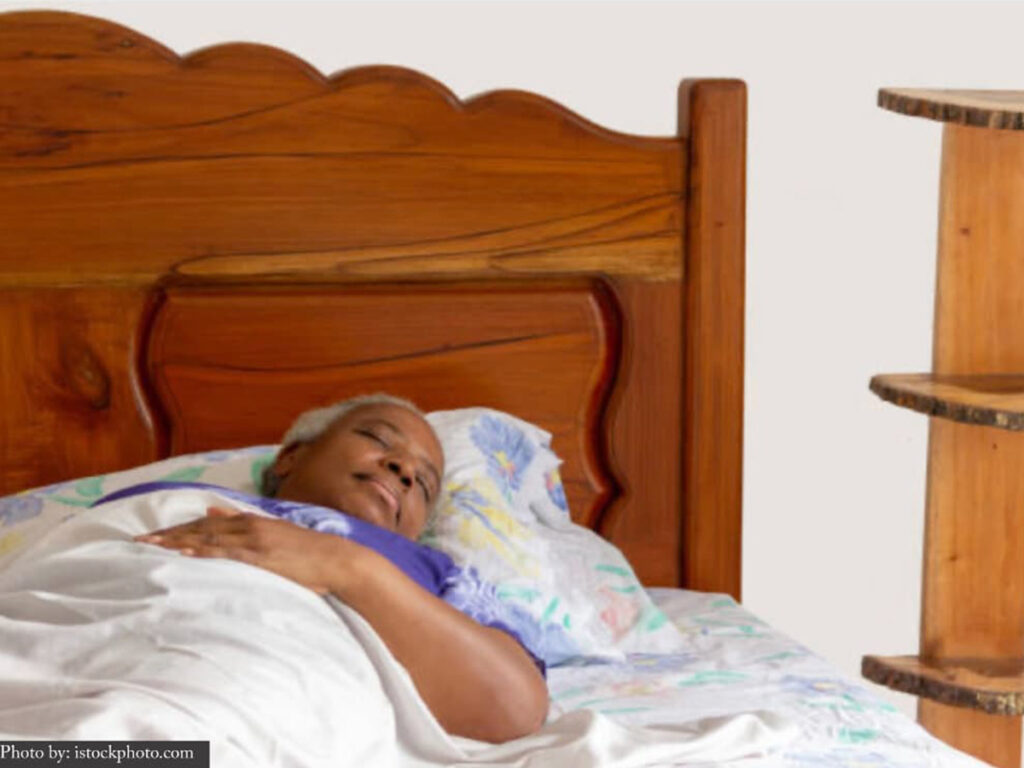

I can see my genesis from my mother’s ward. What a short, tiring distance.
…
Empires, I’ve learned, don’t fall in a single day. They taper into absence. Byzantium flickered for a century before its final siege. The Oyo Empire haemorrhaged influence before the cavalry charges stopped meaning anything. Benin was already weakened before the bronzes were carted away and the city burned.
My mother, too, diminishes by degrees. The body arranges its collapse like slow bureaucracy. Blindness isn’t a singular catastrophe. It’s administrative decay, paperwork misplaced between neurons, signals misfiring in silence. Something breaks, then stabilises. Then breaks again. Decline is always gradual enough that memory remains involved. It’s almost cruel. You must watch the empire rot while still remembering the senate, the pageantry, the language fully alive.
Motherhood is an empire. Or rather, an empire is a motherhood scaled into geography and ambition. The same insistence on governance. The same myth-making. The same pretence of eternity. The same inability to admit exhaustion. My mother’s imperial project was survival. She had subjects (us) and laws (her voice, her admonitions, her sangfroid, her love dressed as severity). She once governed with clarity — light in her eyes, certainty in her posture, authority in her gait. And like all rulers who came to power unwillingly but performed the role anyway, she became defined by how long she could forestall collapse.
When the Roman historian Livy wrote that Rome fell because the Romans forgot themselves, he was writing about identity as erosion. Empires dissolve when the memory of their origin ceases to feel convincing. I wonder if my mother fears she is forgetting herself. The woman in power suit, humming George Strait, collapses into the woman who can’t distinguish my silhouette at the door. The teenage girl bullied for her fatness dissolves into the matriarch who slumps in chairs and calls my name like a prayer she is trying to verify still works. She is becoming a myth in real time.
My brothers and I have become the ruins of that myth. We’re provinces seceding one by one. One drowned himself in drink, slowly, ritualistically. Another fled across continents, exiling himself in the pursuit of neutrality, his voice now delayed by time zones. The third is memory. A child we speak of only as a historical event, like the civil war, like the fall of Constantinople. He is invoked only for emotional accuracy, never for narrative. My mother speaks of him like a treaty that was broken. I never met him, but I know him more intimately than I know myself. This is the curse of the dead — they take up residence in the psyche with no plan to leave. The living are too busy decaying to compete.
When I read Coetzee’s Age of Iron years ago, I didn’t understand the syntax of a mother watching her nation fail as her body did, too. I understand now. A state isn’t an abstraction. It’s the mother’s body projected outward. When she loses her eyesight, we lose our map. When she slumps, we lose our horizon. When she stops gossiping, the weather changes permanently. I used to believe that family was a structure one could opt out of through intellectualisation. I don’t believe that anymore. If the empire falls, we fall with it, if only in language.
There is this memory from 2005 — the curls, the head tilt, the casual regality. My mother laughing in the mirror while adjusting lipstick. A mundane coronation. She was never queen of anything, but she behaved like one, because her survival required theatrics. There is no kingdom without an audience. I was her audience. A child with uncomplicated joy and no sense of doom. The apartment smelled of lavender and fried plantain. My father hovered in the doorway, captivated and bewildered. The world wasn’t yet contracting. The empire was whole.
What remains of that empire now? A house that feels like a mausoleum for conversations. A kitchen once filled with the clatter of pots, now quiet except for the hum of appliances pretending to be alive. The phone call interruptions. The fatigue. The blindness.
There is a line from Cavafy: “What are we waiting for, assembled in the forum? The barbarians are due here today.” We never recognise the barbarians when they arrive. Sometimes, they are cataracts. Sometimes, they are alcohol. Sometimes, they are time. Sometimes, they are the quiet recognition that the queen will not live forever. The decline isn’t tragic. It’s factual. Even Augustine, chronicling Rome’s fall, couldn’t muster tragedy. Only inevitability. He wrote of grief like an accountant.
My mother’s blindness is the geography of inevitability. I’m learning to talk to her in new ways, slower, gentler, more literal. Language has become an architecture. I must signal myself before I speak.
“It’s me,” I say, announcing an arrival. There is dignity in stating the obvious.
She still smells things I don’t. The hypersomia remains, sharpened like a final weapon. Her body, retreating from vision, asserts itself through scent. She can diagnose my emotional state by the faint chemical shifts in my sweat. She still recognises my brother’s alcoholism without seeing him. She identifies grief by temperature. She locates guilt by silence after I speak.
Empires always keep one last secret police.
With any luck, and I use the word carefully, she’ll be dead within the decade. I don’t mean this cruelly. I mean that decline is exhausting to witness and crueller to endure. I mean that total collapse is its own violence. I mean that even Rome deserved fire in the end.
When she dies, the girl I love will die, too. The one who makes faces in church. The one who smells rain minutes before it falls. The one who giggles when I mention serial killers in novels. The one who hums songs while ironing clothes, as though the world weren’t on fire.
I’ll not miss the mother. I’ll miss the citizen of her own vanished kingdom.
Every empire becomes ruins. Every ruin becomes a pilgrimage. Every pilgrimage becomes an identity. That’s my inheritance.
The empire is ending. I remain its historian.
There is a kind of custodial duty in remembering. Memory isn’t nostalgic, but it does have an administrative mien. Someone has to preserve the records of a fallen state, even if the archive is unstable and the language of its documentation is grief. I sometimes think of myself as a clerk in some abandoned ministry, sorting through files that have lost their relevance. Still, I file them. I label them. A life deserves to be stored somewhere.
I’ve been re-reading Things Fall Apart. Achebe wrote of villages and gods, and rites that were never meant to be metaphors, but inevitably became so in the aftermath of colonial reading habits. Yet, what interests me now isn’t Okonkwo’s death nor the banality of the District Commissioner. It’s the quiet collapse of certainty. A man who once believed the world was knowable becomes unsure of his own hands. Not because he changes, but because the light he sees by has altered. That’s my mother now. The world hasn’t ended, but the illumination that once made it legible is dimming. She still knows who she is. She simply no longer sees the mirror that confirms it.
I watch her pick up objects by memory rather than sight. The way her hand grazes the table first, then travels by shape, then decides. A spoon is no longer a spoon. It’s a problem to be solved. A puzzle of weight and angle and approximation. I can see the moment calculation replaces instinct. Sight was once so natural it was indistinguishable from thought. Now thought performs the labour. The empire is still functioning, but the taxes are higher.
There are days when she forgets that she is going blind. The body has a talent for denial. She will reach for something directly, misjudge the distance, and laugh. Not a self-pitying laugh. A laugh of recognition, as if the gesture has reminded her of a private joke. Perhaps this is the residue of all empires — humour at the absurdity of endurance. Even Rome laughed while the Senate dissolved into ceremony.
The doctors say the cataracts are operable. They speak with the gentle optimism of professionals who don’t live inside the consequences of their assurances. My mother listens, nods, and agrees to the appointments. But she doesn’t speak of surgery. She doesn’t speak of futures. She behaves as though the world will simply continue narrowing until it becomes a singular point. I don’t think she fears blindness. I think she fears what she’ll no longer have to look away from.
There are things she has never wanted to see. My brother’s alcoholism. My father’s quiet disappointment. My own emotional retreat, which I disguise as thoughtfulness. For years, her sight was the mechanism of denial. She saw but didn’t acknowledge. Blindness, in its own perverse way, spares her this work. It grants permission to stop witnessing pain.
Perhaps, this is why empires fall. Not because they are conquered, but because they grow tired of looking directly at themselves.
I often think of the Library of Alexandria. Not the fire. The centuries before it. The scholars copying texts, translating, preserving, and expanding knowledge under the assumption that the archive was eternal. In reality, the archive was always temporary. Knowledge is only as durable as the bodies that carry it. My mother carries so much knowledge of our family that when she dies, entire histories will vanish. Customs, jokes, grudges, origin stories, names of cousins who are now only rumours. I’m not sure I’ll remember them. Not because I lack devotion, but because memories must be repeated to survive. I’ve not repeated enough.
My father, even in his decline, believes the family can be repaired through force of will. He speaks of reconciliation like a general planning a campaign with no soldiers. He wants the sons returned. He wants the dinners restored. He wants the myth reconstituted. He doesn’t understand that every empire dies once it has tasted too much knowledge of itself. My mother understands. She has stopped trying to gather the pieces. She’s preparing for burial, not restoration.
We live in a nation that has also known collapse, partial restoration, and collapse again. Perhaps, this is why Nigerian families treat memory like salvage. We know ruins. We know how to build homes inside broken structures. We know how to perform happiness in rooms that echo. My mother grew up in instability. She chased order with ferocity. Now, she’s losing even the visual coordinates of her world. She no longer pretends we can be arranged into anything coherent.
The irony is that I love her more now than I ever did when she was whole. When a monarch stands tall, one sees only the crown. When the crown falls, one sees the human head. There is a gentleness in her now. A softness unguarded by the need to govern. She no longer corrects me. She no longer strategises my life. We sit in the kitchen, and she asks me to tell her things she doesn’t need to know. The weather. The street market. The price of bread. The sound of the neighbour’s radio. I describe the world to her, and she listens like someone being read a sacred text.
In this, I’m not the historian. I’m the last citizen of the empire, returning to report on a world that’s still visible to me and no longer to her.
Sometimes, she says, quietly, “I used to see that.”
Not in sorrow. In wonder.
There is something holy in bearing witness to the gradual unmaking of a life. Not transcendent. Not beautiful. Just true.
When the empire finally ends, there will be no anthem. No ceremony. No chronicler, but me.
And I’ll continue to speak of her in the present tense. Even when there is no body to confirm it.
Because the empire has already fallen. But I’m still living inside its walls. ♦
Akinwande Remi is a Nigerian writer, critic, and emerging film programmer interested in literature, cinema, music, and the everyday textures of contemporary life. His work explores how storytelling responds to social reality, often engaging questions of form, memory, masculinity, capitalism, and artistic responsibility through a literary and sociological lens. His writing has appeared in The49thStreet, What Kept Me Up, Poetry Column, and Screen in Transit, 2026 Naira Books short story anthology A House That’s Not a Home. Drawing influence from both modernist literature and contemporary cultural criticism, Remi approaches criticism as an artistic and intellectual practice, bringing a thoughtful, idea-driven sensibility to film and literary discourse, while developing film-centered initiatives and long-form creative projects in Nigeria.