
It was my first time in Lagos. Like many Nigerians, I had long dreamt of visiting this city known for its charged energy. Lagos — the dazzling, chaotic, intoxicating metropolis — had always been presented to us in stories full of the good, the bad, and the ugly.
I first arrived in 2004. I had travelled from Kaduna to organise a membership induction programme for the Institute of Industrialists and Corporate Administrators, where I was working at the time. I came to the city with high expectations: joy, excitement, and fulfilment. But those feelings were soon cut short by an encounter with the Special Anti-Robbery Squad, better known as SARS.
It happened on the second day of my stay, in a small hotel near Lagos Island. As a representative of the institute, I went out to distribute invitation letters to prospective members for our event. I found myself in the bustling CMS area, heading towards a firm whose name I can no longer recall.
Then someone shouted from behind, “Hey! Hey! This man! Stop!”
I turned around and saw a young man in jeans and a brown T-shirt walking briskly towards me, signalling me to wait. I stopped. I can’t recall his exact words. But, suddenly, I realised I was being treated as a suspect for a crime I hadn’t even been told about. I protested, and he pointed towards a group of police officers leaning against a parked car. He said I should follow him to meet his boss and “explain myself.”
I was stunned.
“Explain myself, for what?” I asked.
He slipped his hand into his pocket, pulled out an ID card, and identified himself as a police officer. Since I knew I was innocent, I wasn’t afraid. I thought it was a simple case of mistaken identity. I decided to follow him, clear my name, and continue with my work. When we reached the spot, I saw a van parked behind another vehicle with bold letters painted on it: STATE ANTI-ROBBERY SQUAD. Beside it stood another well-dressed young man in corporate attire, who had also been detained.
The policeman took me to his boss — a fair, middle-aged woman, sitting inside the vehicle. She said she would attend to me “shortly” and signalled another officer to keep me in place.
At that moment, anger welled up inside me, but I knew better than to argue. Nigerian police officers are often unpredictable and vindictive. A single wrong word could lead to charges of “defamation of character”, “resisting arrest,” or any other manufactured crime. So, I stayed quiet.
The “shortly” she promised turned into over an hour. I stood there, watching as other Nigerians were brought before her, some dragged violently, others pleading. I sighed deeply. Lagos, the city I had longed to see, was already turning into a nightmare. The stories I had heard about random arrests were happening in real life… to me.
When the boss finally emerged, she ordered her subordinates to load all of us into the van. I gathered the courage to ask what crime I had committed. I didn’t get an answer. Instead, I saw the corporate-dressed man beside me slapped across the face for asking the same question.
“What did I do?” he shouted. “I will not go anywhere! You must tell me what I did before taking me to the station!”
“Who are you shouting at? Get inside the vehicle!” the boss barked.
“Madam, I will not.”
Before he could finish, two officers shoved him into the van.
I asked again what I had done.
The officer beside me only replied, “You’ll find out at the station,” and gestured me to enter.
I didn’t want to be beaten, so I quietly climbed in and sat next to the corporate guy. Behind us sat several other “captives.”
Just as another man was about to be loaded in, he bolted. Three policemen pulled him down, beat him, and dragged him up the van.
“I will not follow you people! You’re kidnappers! How can you arrest me for nothing?” the man screamed.
His cries drew the attention of passers-by. Some onlookers shouted in protest.
“Make una leave dem na! Wetin dem do? Una just dey catch people anyhow!” one man yelled.
“Come here!” a policeman shouted, threatening to arrest the bystander as well.
The man disappeared instantly.
If this had happened in the Nigeria of today, the fear of kidnappers posing as police officers would have been entirely justified. But in 2004, that thought never crossed our minds. We believed we were simply victims of corrupt officers looking for easy money.
The van moved. As a newcomer, I didn’t even know which station we were being taken to. When we arrived, our phones were seized, and we were told to sit on a rickety bench in the station’s compound. There were about nine of us in total. The man who had been handcuffed earlier was finally freed but warned to keep quiet.
I sat again beside the corporate man, who was breathing heavily, his nostrils flaring with anger. I told him to stay calm, that we would be fine because we had done nothing wrong.
Through him, I learned the true reason for our arrest. He explained that SARS was conducting a citywide raid on suspected internet fraudsters, popularly called ‘419’. Their logic was as absurd as it was common — anyone neatly dressed in a shirt and tie was automatically a suspect. Such people, the police believed, not only “looked” like fraudsters, but also had the money to pay bribes to buy their freedom quickly.
That was when I noticed that more than half of us were wearing ties. One man was in a full suit. I felt deeply disheartened by the unprofessional, corrupt system we were trapped in. After a while, a policeman took us inside. Behind the counter sat the SARS boss, flanked by two officers. She stood up and began hurling accusations that we were fraudsters, swindlers, pickpockets, and criminals.
None of us was allowed to speak.
One bold man couldn’t take it anymore.
He shouted, “You’re a shameless liar!”
Two officers pounced on him, beating him before dragging him into a small, dark cell known as ‘the back of the counter’. The man who had earlier resisted arrest kept silent this time. I didn’t blame him. His forehead was swollen, his spirit broken.
Hours passed. Night fell, and hunger gnawed at our insides. Two policemen whispered that we should “appease” the woman with money. I was outraged. Appease her, for what? I hissed and shook my head. But when the others stood up to go, I followed reluctantly. The woman refused to listen and chased us out. The officers told us she was only pretending and that we would surely spend the night in detention.
“By morning,” they advised, “make sure you people have arranged something good for her.”
I was filled with despair. I had committed no crime. Yet, here I was, being tormented by criminals in police uniforms. Without our phones, there was no one to call for help. I cursed the day I dreamt of Lagos. At twilight, a police sergeant offered to buy food for us. We gave him money. I don’t remember what he brought back, but I remember that he kept the change. He simply considered it his ‘fee’ for the errand.
Later that night, we were called inside to surrender our belongings before being sent to the cells. As I stepped forward, a young policewoman hit me hard on the back. I turned sharply and glared at her, but she looked away, pretending nothing had happened. I handed over my bag and my money.
Just then, a senior officer arrived, the Divisional Police Officer (DPO). I knew who he was by the way every officer stood up to salute him. He looked straight at us.
“Who are these?” he asked.
An officer explained that we had been brought in by the SARS unit. The DPO asked what our offence was. The officer’s answer was unconvincing.
The DPO hissed, waved his hand, and said, “Release them now.”
Those three words restored our stolen freedom.
That was my bitter encounter with SARS.
Since its creation in 1992, the unit has brought more suffering than safety. The Nigerian Police Force, which should protect, became the enemy of its own people.
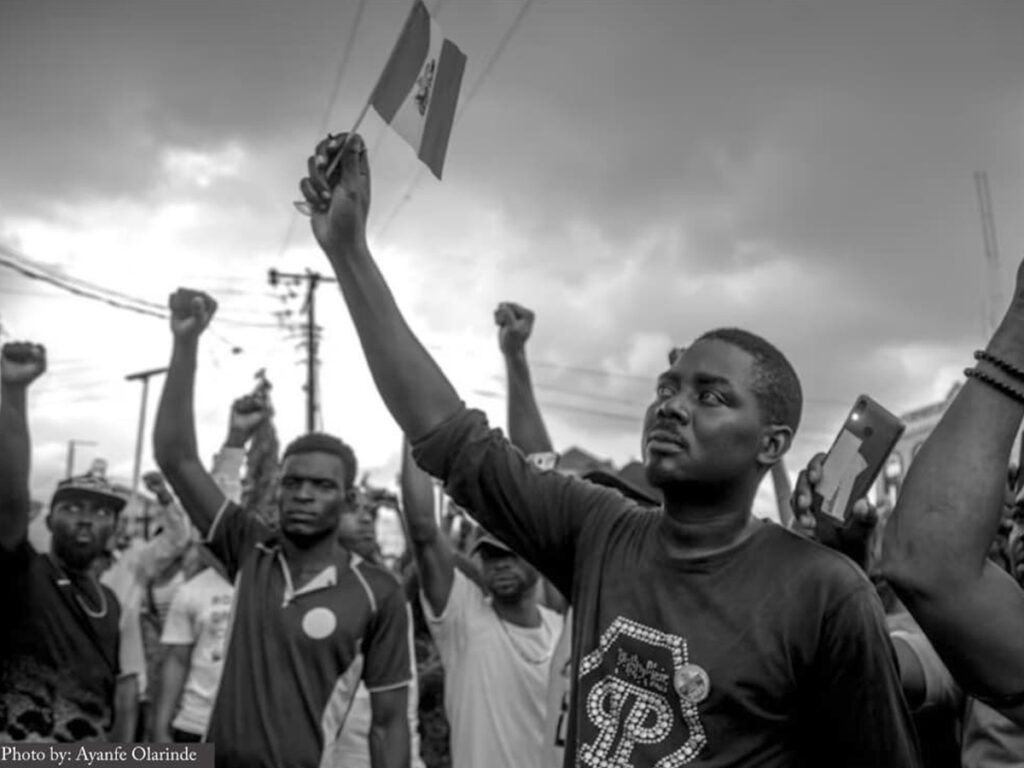
Years later, in October 2020, I was at my office in Kaduna when I saw the #EndSARS protesters marching through Junction Road. I stepped outside and watched the young men and women, full of passion, waving placards against police brutality. I smiled and waved back, moved by their courage. They were peaceful and organised. I told a colleague that if this movement sustained its momentum, it could cleanse the entire system.
Eventually, the federal government announced that SARS had been disbanded on October 11, 2020, replaced by a new unit called SWAT. But many Nigerians didn’t believe the change. Similar promises had been made in 2018, and led nowhere. The protests continued, demanding true accountability.
Then came the unthinkable. On October 20, 2020, news broke that peaceful protesters at the Lekki Toll Gate in Lagos were being shot at. To this day, no satisfactory answer has been given as to who gave that order.
The #EndSARS protest was a time bomb planted in 1992 that finally detonated for the world to hear. It was the sound of decades of brutality. The sound of injustice. The sound of the innocent tortured and violated.
And, among those voices, buried in the echo of that explosion, is my own story, the day I met SARS in Lagos in 2004, simply because I chose to wear a tie. ♦
Stephen Adinoyi’s poem, Seoul, won the first prize during the 2016 Korean/Nigerian Poetry Festival. His poem, Divine Slavery, won the first prize for the 2020 Ibua Journal’s Poetry Competition. His creative non-fiction, The Fearless, which depicts the life of Nigeria’s most fearless female activist, Gambo Sawaba, won a prize and was anthologised in the Cost of Justice Anthology. He has published two novels: Teen of Fifteen and School Girl. He is published in ANA Review, Ake Review, Ebedi Review, Ibua Journal, etc. Anthologised in anthologies like: Fireflies; After the Curfew; Footmark; From Here to There; KISA/LEA Anthology; etc. His pidgin play, I No Beta Pas My Nebor, was staged in Abuja, in 2013 by SFEV. He is fellow of the Ebedi International Writers’ Residency since 2014. He is the chairman of the Association of Nigerian Authors (ANA), Kaduna chapter, and the former chairman of the Kaduna Writers League.