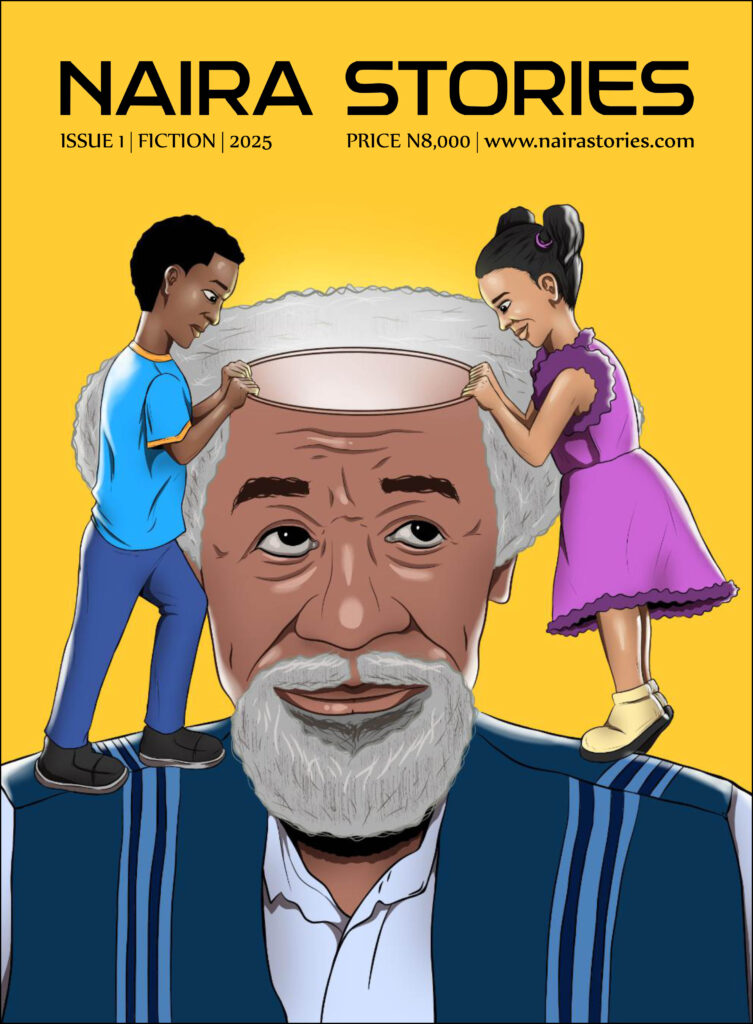
Nobel Laureate, Professor Wole Soyinka, has disclosed that the United States government has revoked his B1/B2 visa.
He described this as an “unexplained witch-hunt,” which he believes may be connected to his long-standing criticism of US President Donald Trump.
At a press briefing titled ‘Unending saga: Idi Amin in whiteface!’ held at Kongi’s Harvest Gallery, Freedom Park in Lagos, the 91-year-old playwright revealed that he was informed of the development six days earlier through a letter issued by the Non-Immigrant Visa Section of the US Consulate General in Lagos.
According to the letter, dated 23 October, the revocation was carried out “under the authority of US Department of State regulations” after “additional information” reportedly came to light following the visa’s issuance.
“I have no visa; I am banned, obviously, from the United States. And if you want to see me, you know where to find me,” Soyinka told journalists.
He added that the US authorities provided no explanation for their action, insisting that he had never committed any offence or breached any law that could justify such a decision.
“I’m still looking into my past history… I don’t have any criminal record or even a misdemeanour to qualify for the revocation. Have I ever misbehaved toward the United States of America? Have I gone against the law anywhere?” he asked rhetorically.
The development, however, did not appear to rattle the octogenarian, who maintained a calm demeanour throughout the briefing. He said he bore no resentment towards the US or its people but would continue to speak out against injustice and racial prejudice wherever they occur.
“I will continue to welcome any American to my home if they have anything legitimate to do with me. My advocacy for justice and equality remains intact,” he added.
The revocation follows a series of exchanges between Soyinka and the US Consulate in recent months. In September 2025, he received an invitation to appear for a visa re-interview scheduled for 11 September, a date he considered “symbolically inappropriate” due to its association with the 9/11 attacks.
Soyinka initially dismissed the invitation as a scam, noting that it resembled fraudulent messages sent by impostors promising visas for payment. When it later turned out to be genuine, he declined to attend, describing the request as “totally out of consideration.”
“It was very strange because I had never received that kind of letter from that or any other embassy,” he said.
The consulate’s letter requested Soyinka to present his passport for the physical cancellation of his visa, citing “additional information” discovered after the visa was issued.
Soyinka’s relationship with the United States has long been marked by both admiration and tension. Following decades of academic teaching at American Ivy League universities, he famously tore up his US Green Card in December 2016 after Donald Trump’s election, in protest against what he described as “xenophobic and racially charged politics.”
The United States Embassy in Nigeria did not immediately respond to media requests for clarification. However, diplomatic observers note that Washington recently changed its visa policy for Nigerians, reducing the validity of non-immigrant visas from five years to single-entry, three-month permits, a measure seen as part of stricter post-Trump immigration controls.