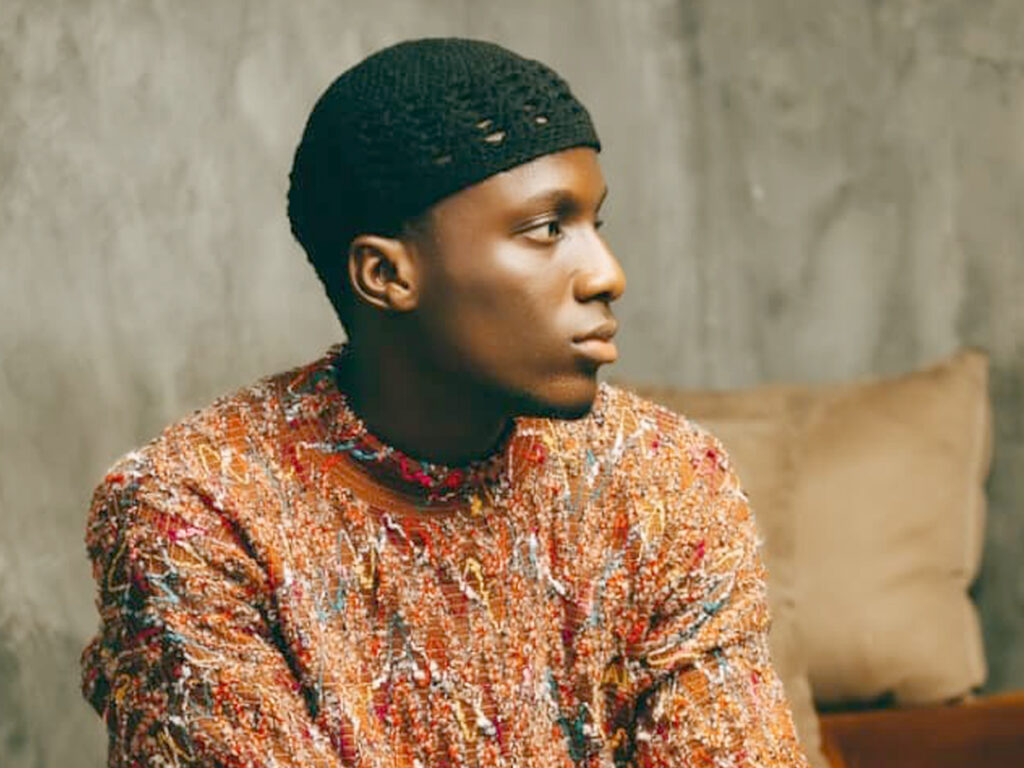

Favour Megwara is a third-year Political Science student at the University of Lagos (UNILAG), a professional photographer, and a storyteller. He has photographed Emmanuel Lubanzadio, OpenAI’s lead for Africa, former Nigerian Vice President Professor Yemi Osinbajo, the Olu of Warri Ogiame Atuwatse III, Princess Olatorera Oniru, and notable professors. In this interview by GRATEFUL OGUNJEBE, he speaks about his studies and work, and how photography can impact people, policies, and the government.
You once mentioned that there was a delay before you got into UNILAG. How did that experience shape your journey, and why study Political Science?
My journey into the University of Lagos was, in many ways, divine. Looking back, I believe the timing was perfect. If I had gained admission earlier, I might not have achieved all I have today. That delay turned out to be a blessing — it aligned with a period when new opportunities had opened up in the university.
I chose Political Science not out of chance or low scores, but from a deep curiosity about governance and how policies shape society. That curiosity grew into passion. I am currently in 300 level, working on a project under the Millennium Fellowship called Civic Light, which focuses on citizen engagement and participation in governance. Balancing my academics with creative work has not been easy, but it is been rewarding. Every part of the journey is connected to the story I am building.
You are very active as a photographer. How did it all begin, and how do you manage that alongside your studies?
Photography started from home. My mom inspired me — she was always documenting family moments, and I think I picked that habit up naturally. I began with mobile photography, just taking pictures of people because I loved doing it.
The real turning point came through a Young Professionals Forum programme in church. They were training people in different skills, and someone suggested I take photography instead of graphic design. That decision changed everything.
Since then, I have learned mostly by observation and consistency. I have attended only two masterclasses — the rest have been practice, volunteering, and staying curious.
Balancing photography with academics is tough, but I do not chase “balance” — I chase priority. I plan shoots around my school schedule, and photography even helps me unwind from academic stress.
What kind of photographer are you, and does photography sustain you financially?
People often ask what niche I focus on, but I do not like to box myself. Whether it is weddings, sports, portraits, or concerts, my goal is to tell authentic stories. So, I call myself a story-driven photographer. At the core, my work is documentary. Everything I capture — events, people, places — is documentation.
And, yes, photography pays my bills. It is my main source of income, though I have a few side gigs that complement it.
You describe yourself as a media strategist and creative professional. What does that mean in practice?
Those titles — media strategist, photojournalist, creative professional — are not just roles; they describe how I function. I am a contributor to Getty Images, 54ruum, and Pexels, and a member of the African Photojournalism Database. Some of my works have appeared in The Guardian and BusinessDay.
I have also worked with organisations and individuals, building content frameworks and media strategies. I do not belong to any single firm because I prefer flexibility. Photography, for me, is personal — it is how I show the world through my lens. I want my images to go beyond aesthetics — to evoke emotion, tell truths, and inspire reflection.
You photographed Emmanuel Lubanzadio of OpenAI during UNILAG’s International Week. How did that happen?
That was a divine alignment. I was volunteering with the UNILAG Communications Unit, often photographing the Vice-Chancellor. One day, I got a call from the head of the unit — I honestly thought it was a query! But instead, they told me I had been recommended to photograph Emmanuel Lubanzadio, OpenAI’s lead for Africa.
There was one problem — my camera had just gotten damaged. When I mentioned that, the Director of International Relations asked how much it would cost to rent one, then approved more than I requested. That alone humbled me deeply.
Working with Emmanuel was amazing. He was so approachable and kind that the entire experience felt natural. It was more than a job. It was validation that my work was being noticed. Nothing official has followed yet, but it opened doors and strengthened my confidence in divine timing.
You have worked with several notable people and brands. How have these shaped you?
Honestly, I have lost count. I have photographed the former Nigerian vice president, Professor Yemi Osinbajo; the Olu of Warri, Ogiame Atuwatse III; Princess Olatorera Oniru, Professor Folasade Ogunsola of UNILAG, and Professor Ibiyemi Olatunji-Bello of LASU. I have also worked with brands like Flytime Fest, House on the Rock, Pepsi, and Coca-Cola.
Each experience taught me discipline, structure, and how to carry myself in professional spaces. When you work with high-profile people, you cannot afford guesswork. Every detail matters.
But fame is not my pursuit. Photography is my tool, not my identity. What I seek is impact — telling authentic stories and living with purpose.
You recently spoke at TEDxAyobo. What was your talk about, and what did the experience mean to you?
Speaking at TEDxAyobo was unforgettable. I had not expected to be invited. I just wanted to challenge myself by applying, and thankfully, I got in. Sharing that stage with people like Gilmore, the content creator, was surreal.
My talk, Youth in politics: Beyond information — getting it right, explored how young Nigerians view politics as a “dirty game.” I used photography as a metaphor, explaining how every frame and angle matters, just like in governance.
The response was overwhelming. It showed me that creativity and civic engagement can coexist — art and activism do not have to be separate.
On LinkedIn, you once wrote: “The idea of fame scares me… The more I was overlooked, the more I overworked.” What did you mean by that?
Those lines reflect two sides of the same truth. Fame does not scare me because I am unsure of myself — it is because I have seen how fame can distract from purpose. I am driven by impact, not attention.
And being overlooked? That is part of my process. Every “no” I have gotten has sharpened my skill. The less I was seen, the better I became. So, they are not contradictions — they are a conversation between purpose and process. My purpose is to inspire, to document, and to tell stories that lead people to truth and empathy.
You once said politics is not dirty — it is just misused. If given power, what two issues would you solve?
First, I would bridge the communication gap between the government and citizens. Policies often fail not because they are bad, but because they are disconnected from the people they are meant to serve.
Second, I would reignite patriotism and accountability among Nigerians. We need to rebuild a sense of shared ownership — that this country belongs to us all. When citizens take responsibility, governance becomes a shared effort.
How do you see photography contributing to leadership and development in Nigeria?
Photography has the power to drive change. It documents truth, preserves history, and stirs emotion. In Nigeria, it can bridge gaps between citizens and government, spotlight what needs fixing, and celebrate what’s working. But the industry needs structure — maybe even a ministry dedicated to culture and creative economy. People like Ayo Adeagbo and Nosa Asemota are already setting great examples.
Personally, I contribute by mentoring young creatives, volunteering, and organising educational sessions on creativity and professionalism. My lens is not just for capturing moments — it is for defining movements.
AI is changing creative work. Do you see it as a threat or a tool?
Definitely a tool. AI should not be feared — it should be embraced. It is not here to replace creatives but to enhance what we do.
I use AI to draft contracts, create mood boards, and even speed up editing. But AI cannot replace the human touch — the laughter, the connection, the emotion behind the camera. People do not just buy pictures from me; they buy the experience. AI might replicate results, but it cannot replicate the soul.
What about AI and copyright issues — do they worry you?
A bit, yes. AI has made creativity easier but also more vulnerable. Anyone can now copy or reproduce work with little accountability. That is why we need structure, a proper framework to protect intellectual property in the creative industry.
I believe we need a unified body or ministry that anticipates these challenges, not just reacts to them. The future of creativity in Nigeria is not doomed. We are just in that messy middle between growth and structure.
What would you tell the government about supporting young creatives?
The creative industry is Nigeria’s new oil. It is redefining how the world sees us. But we need real support. High import tariffs make creative tools too expensive. Reducing them would help massively.
The government also needs to build creative hubs, invest in training, and publicly celebrate local talents. Most importantly, it should create a regulatory body to ensure fairness, standardisation, and protection. Supporting creativity is not just about funding — it’s about building an ecosystem.
Finally, what is next after UNILAG?
Honestly, I see myself at the intersection of creativity, politics, and technology. Photography will always be part of me, but political science gives it context. I plan to build a creative hub that documents stories of leadership and change across Africa, while also staying involved in civic and policy work.
In five years, I see myself leading — not necessarily as a politician, but as someone influencing systems and narratives. Still behind the camera, still speaking, still creating, but on a much larger scale.