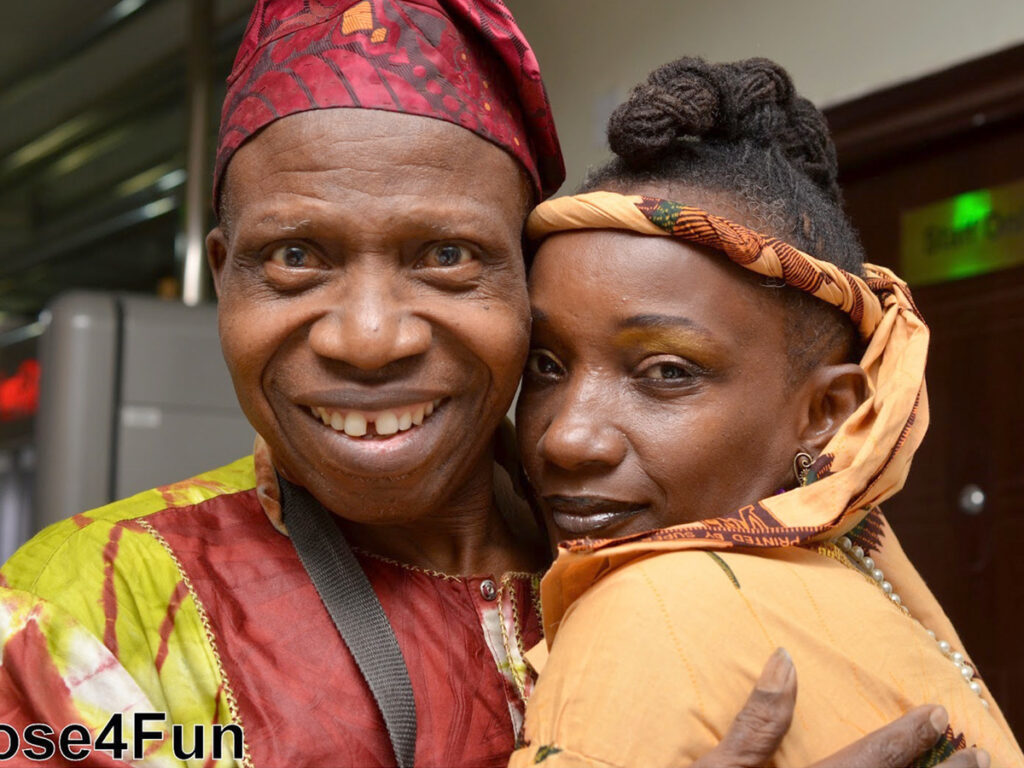

Four years after the death of legendary Afrobeat pioneer Orlando Julius, his wife and longtime creative partner, Latoya Ekemode, has spoken about their marriage, his final moments, and the lingering debate surrounding the origin of Afrobeat.
In a revealing interview, Latoya reflected on life since the music icon’s passing, describing his death as peaceful and dignified. She said the memories they built together through music, travel, and creative collaboration have continued to give her strength as she works to preserve his legacy through cultural and artistic projects.
The dancer and performer also disclosed that although she met Orlando Julius as a teenager, their professional relationship started much later, after she completed audio engineering school. According to her, their relationship blossomed through music, shared vision, and mutual respect despite their age difference and contrasting cultural backgrounds.
Latoya said Orlando Julius remained deeply connected to Nigeria despite his international recognition and extensive tours across Europe and the United States. She noted that many Nigerians never fully appreciated the depth of his catalogue beyond popular songs such as ‘Jagua Nana’, ‘Colombia’, and ‘Ololufe’.
According to her, the late musician enjoyed stronger recognition internationally, where audiences and fellow musicians celebrated his originality and influence on global music culture. She added that although some Nigerian musicians acknowledged his contributions later in his career, his impact had long been felt across different parts of the world.
Speaking on the recurring debate over who created Afrobeat between Orlando Julius and Fela Kuti, Latoya maintained that both artistes contributed immensely to the genre’s evolution. She explained that Orlando Julius experimented with the sound before Fela popularised it globally through politically conscious music and activism.
“I think everybody created Afrobeat,” she said, adding that the controversy itself keeps interest in the music alive and encourages younger generations to revisit the works of both legends.
Latoya further revealed that she and Orlando Julius relocated permanently to Nigeria in 1998 after years in Nashville, United States. She admitted the transition was initially difficult but said returning home gave the late singer a renewed sense of purpose and cultural identity.
As part of ongoing efforts to immortalise the veteran musician, she disclosed plans for tribute concerts in the United States and Europe aimed at promoting a documentary project about his life and career. The concerts, she explained, would also feature collaborations between African artistes and international musicians familiar with Orlando Julius’ music.
Beyond music, Latoya described the late entertainer as a “cultural architect” who independently handled much of his recording, production, and visual work. She said many people underestimated his technical abilities, noting that he was largely self-taught in audio engineering and multimedia production.
She also highlighted the development of the Ojah — Orlando Julius Afro House in Ijebu-Jesa, which she described as an artiste development and cultural centre equipped with recording, dance, photography, and video facilities.
Encouraging younger Nigerian musicians, Latoya advised artistes to prioritise originality, humility, and musical craftsmanship instead of chasing trends or public validation. According to her, learning instruments and collaborating openly with others are qualities that help musicians build lasting careers.
Despite the grief of losing her husband, Latoya said she remains committed to keeping his music, message, and cultural contributions alive for future generations.