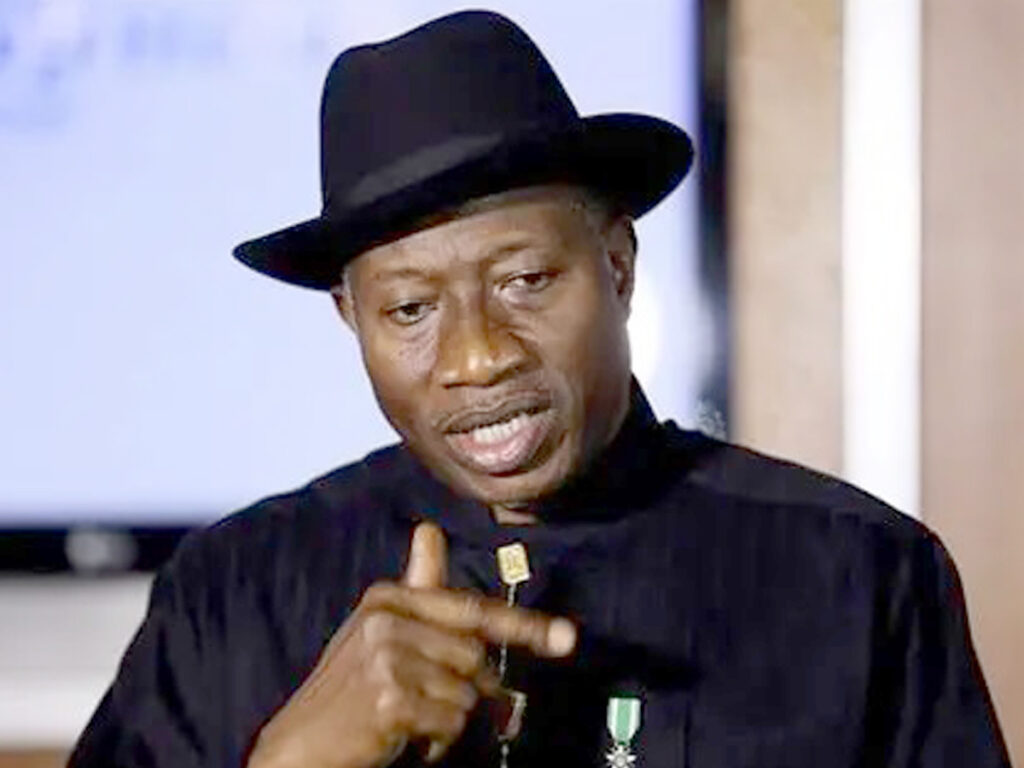

Former President Goodluck Jonathan has warned that growing political intolerance, attacks on campaign convoys, and declining public confidence in democratic institutions could trigger a post-election crisis in Nigeria ahead of the 2027 general elections.
Jonathan gave the warning on Tuesday at the 2027 Peace and Security Conference in Abuja, organised by the Goodluck Jonathan Foundation, where he called on political leaders and citizens to protect national unity and democratic stability.
The conference, themed ‘Safeguarding peace and strengthening social cohesion in a competitive political environment’, comes amid reports of attacks on political candidates, their supporters and campaign convoys across several states as parties prepare for the next general elections.
The former president, who chairs the foundation, said concerns about Nigeria’s political direction had continued to grow, warning that political actors were becoming increasingly unwilling to accommodate opposing views or recognise the right of others to contest for power.
He identified political thuggery, the use of young people to perpetrate violence, and conflicting judicial pronouncements as developments requiring urgent attention.
Jonathan particularly expressed concern over court decisions by courts of coordinate jurisdiction, warning that conflicting rulings on similar matters could weaken public confidence in the judiciary and create unnecessary tension.
He cautioned that declining trust in the judicial system could push citizens towards self-help, with potentially serious consequences for the country’s stability.
Political violence has featured in several reported incidents in recent weeks. President Bola Tinubu’s convoy was attacked in Abuja on November 13 after he observed Jumu’ah prayers in Garki, while the campaign convoy of Nigeria Democratic Congress vice-presidential candidate, Rabiu Kwankwaso, and its Kano governorship candidate, Aminu Gwarzo, was attacked in Bichi Local Government Area on November 15.
The convoy of NDC presidential candidate Peter Obi was also attacked in Calabar earlier in November, while supporters of different political parties have reportedly faced attacks in Lagos, Edo, Kaduna, Cross River and Ekiti states.
Jonathan also warned against the exploitation of ethnic and religious sentiments during political campaigns, arguing that such considerations could prevent competent candidates from emerging as leaders.
He urged Nigerians to prioritise merit, public service and national interest when choosing political officeholders, stressing that leadership quality would determine the country’s future.
Former Vice President Namadi Sambo, who chaired the occasion, similarly called for inclusive governance, responsible leadership and respect for the rule of law. He urged political actors to treat differences as opportunities for constructive engagement rather than sources of division.
The Minister of Defence, Christopher Musa, represented by his Special Adviser on Strategic Communications, Mercy Bala, warned that political competition must not become a source of insecurity or national disunity. He also urged leaders to discourage hate speech, misinformation and inflammatory rhetoric.
Meanwhile, Independent National Electoral Commission Chairman, Joash Amupitan, warned political actors and their supporters against violence, intimidation and attacks on election officials.
Represented by National Commissioner May Agbamuche-Mbu, Amupitan said security agencies would pursue those responsible for violent campaigns, adding that the Electoral Act 2026 provides penalties for electoral offences, including fines and imprisonment.
Former ECOWAS Commission President Omar Touray also stressed that public trust in democratic institutions and electoral processes was essential to sustaining stable democracies.
Executive Director of the Goodluck Jonathan Foundation, Ann Iyonu, warned that insecurity, economic pressures and declining institutional trust could heighten tensions. She cited an Afrobarometer survey indicating that fewer than four in 10 Nigerians believe the 2027 elections will be free and fair.
She warned that violence surrounding Nigeria’s elections could have consequences beyond the country, given its importance to peace and security in West Africa.