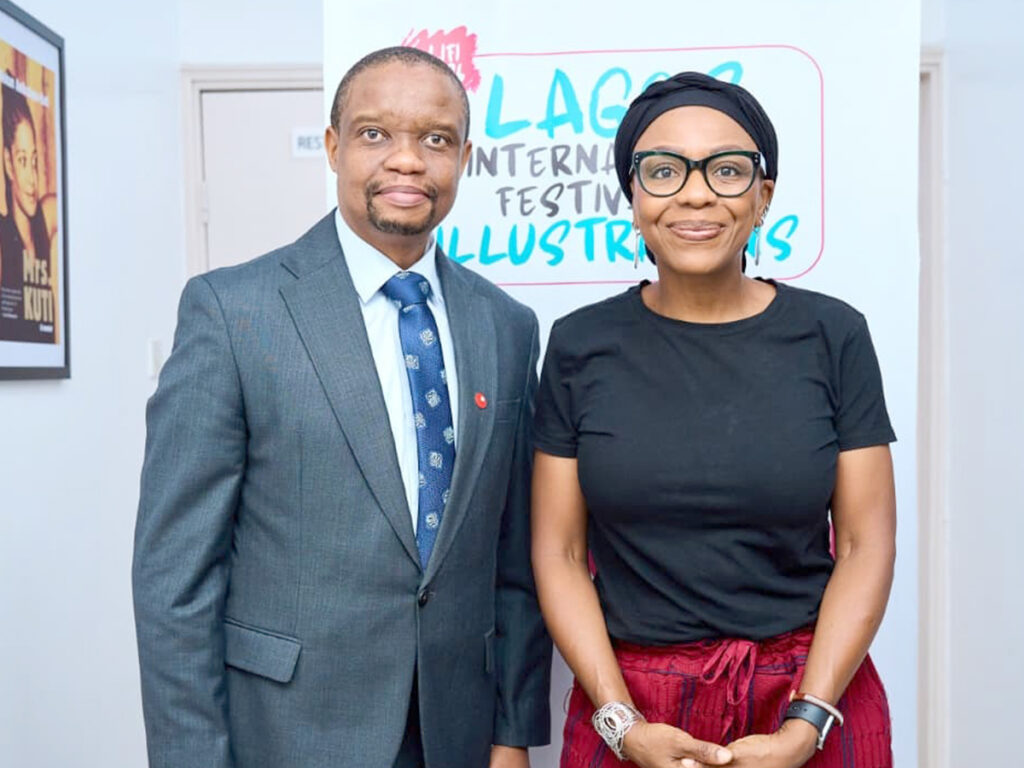

The founder of the Book Buzz Foundation (BBF) and director of the Lagos International Festival of Illustration (LIFI), Lola Shoneyin, has outlined a five-year plan to build a stronger community for illustrators in Nigeria through training, professional development, and international collaboration.
Shoneyin, who spoke during the three-day international festival in Lagos, said the initiative was designed to develop illustration as a professional field in Nigeria while creating opportunities for young creatives to improve their skills and gain international exposure.
The project is currently in its second year and includes a Centre for Illustration in Nigeria, where young illustrators can access courses, training, and professional support.
According to Shoneyin, one of the major challenges among young creatives is the desire for shortcuts, particularly in an increasingly digital environment. She stressed that developing quality creative work requires patience, practice, and experience.
“We want teachers to train both their hands and their minds. This is very important because illustration is a practical skill. You cannot develop as an illustrator only by thinking about the work; you have to practise and create things with your hands,” she said.
She explained that some students had produced illustrations entirely by hand before scanning the finished artwork, noting that the process helped them develop confidence and control.
The programme does not discourage the use of digital tools but encourages young illustrators to develop traditional skills alongside digital techniques.
Shoneyin added that outstanding participants would be recognised at the closing ceremony of the illustration festival through prizes for execution, innovation, and outstanding achievement.
Beyond illustrator training, the initiative is also developing what Shoneyin described as a proper Nigerian project around children’s books and illustration.
The project aims to promote books created by Nigerian writers and illustrators as enrichment materials that can complement classroom learning while helping children develop their imagination, creativity, and understanding.
“We want to make sure that we are promoting the right books for Nigerian children,” she said.
Shoneyin noted that producing quality children’s books requires collaboration among writers, illustrators, graphic designers, and art directors, with each professional contributing to the final product.
To strengthen those skills, BBF has organised training in book design and production, including a four-week online course conducted by a graphic designer and painter for Nigerians interested in the field.
She also outlined the long-term goal of developing Nigerian illustrators who can eventually train others, reducing reliance on international experts.
“We cannot continue to depend on people coming from outside. We need to expose Nigerian illustrators to international standards, give them a strong foundation, and eventually enable them to teach and support others,” she said.
Shoneyin also spoke about an upcoming literary programme in Abuja, where the foundation plans to create opportunities for conversations around Nigerian literature and the contributions of women writers.
One of the planned programmes is a forum bringing together Nigerian women writers to discuss Northern Nigerian women’s writing and the growing contribution of women to Nigerian literature.
The programme is part of BBF’s wider effort to create opportunities for learning, exchange and professional development within Nigeria’s creative and literary communities.
Shoneyin also discussed LIFI’s international collaborations, which have connected Nigerian creatives with illustrators from countries including Switzerland, Poland and Italy.
She explained that the first edition generated interest among international illustrators after visiting participants returned home and shared their experiences in Nigeria.
The growing network has since created opportunities for partnerships in which countries and organisations can share the cost of bringing international illustrators to Nigeria.
Shoneyin said the festival also hopes to bring more international illustrators into its training programmes, both physically and through online classes.
The long-term vision, she added, is to build a strong community that can eventually grow into a full festival, with deeper conversations around illustration techniques, artistic voice, creative impact, and professional development.