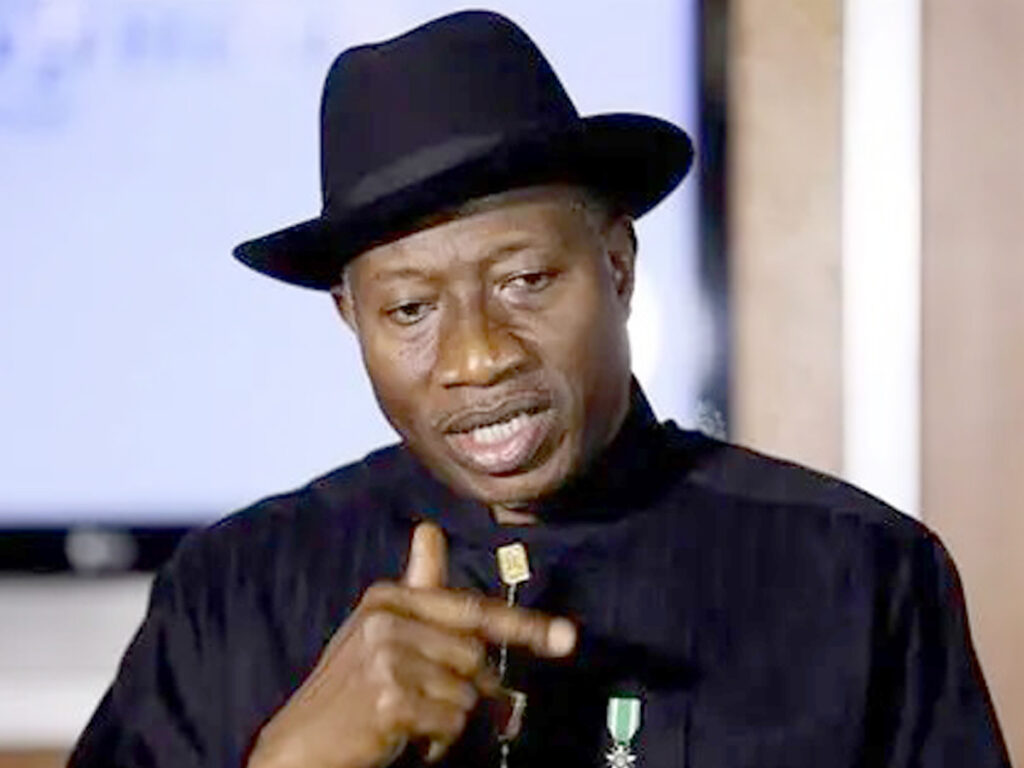

A Federal High Court sitting in Abuja on Tuesday dismissed a suit seeking to stop former President Goodluck Jonathan from contesting the 2027 presidential election, describing the case as frivolous and an abuse of court process.
Delivering judgment, Justice Peter Lifu held that the plaintiff, lawyer Johnmary Jideobi, lacked the legal standing to institute the suit because he failed to show how he would suffer any personal injury or loss if Jonathan decided to participate in the next presidential election.
The court further slammed a N21 million cost against the plaintiff, ordering him to pay N20 million to Jonathan and an additional N1 million to the Attorney General of the Federation, who was listed as the second defendant in the matter.
Justice Lifu ruled that the issue of Jonathan’s eligibility had already been determined by competent courts, including the Federal High Court in Yenagoa and the Abuja Division of the Court of Appeal. According to the judge, the appellate court’s earlier decision affirming Jonathan’s eligibility remains binding.
The judge stressed that courts are guided by the principle of judicial precedent and cannot ignore valid subsisting judgments delivered by superior courts on the same subject matter.
He subsequently dismissed the suit in its entirety, maintaining that it was a misuse of judicial process and should not have been brought before the court in the first place.
Justice Lifu also threw out a separate motion filed by the plaintiff seeking the judge’s withdrawal from the case. The court described the application as frivolous and lacking merit.
The legal dispute had generated public attention due to renewed political conversations surrounding Jonathan’s possible return to presidential politics ahead of the 2027 general elections.
Although the former president has not publicly declared any intention to contest, speculations about his potential candidacy have persisted in recent months, particularly following endorsements and appeals from some political groups and stakeholders across the country.
The plaintiff had argued that Jonathan, who completed the tenure of late President Umaru Musa Yar’Adua before winning a fresh election in 2011, was constitutionally barred from seeking another term in office.
However, previous judicial decisions have consistently held that the constitutional amendment dealing with presidential term limits does not disqualify Jonathan from contesting another election because the amendment cannot be applied retroactively to his earlier tenure.
Jonathan served as Nigeria’s president from 2010 to 2015 after succeeding Yar’Adua following his death in office. He later lost the 2015 presidential election to former President Muhammadu Buhari, becoming the first incumbent Nigerian president to concede defeat in a democratic election.