
Nigerian writer Jerry Falade has recounted how allegations of artificial intelligence (AI) use disrupted a promising international publishing deal for his debut novel, warning that African writers are increasingly being forced to defend the authenticity of their work over such allegations.
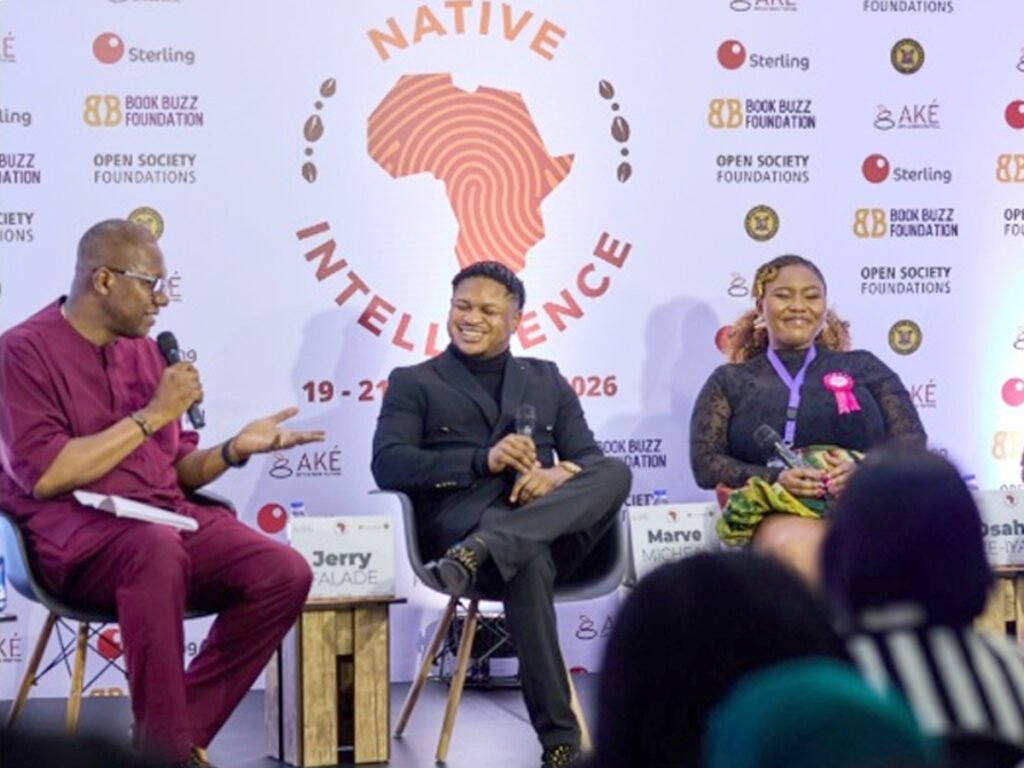
Falade spoke during a panel session at the 14th edition of the three-day Aké Arts and Book Festival in Lagos, where he described the experience of having his authorship questioned after his crime thriller, ‘Call Me, I’ll Hide the Body’, attracted international publishing interest.
The panel session, anchored by Jude Umeh, had Jerry Falade, Marve Anson, and Osahon Ize-Iyamu in panellists, and was titled ‘The future of creative work with artificial intelligence’.
The panellists discussed and answered questions like: Who gets accused of using AI? Who gets believed? The spoke extensively on the racial bias in AI accusations, who bears the burden of proof, and what suspicion does to the writer’s confidence, voice, and will to keep writing.
Speaking on the panel, Falade said his manuscript had secured the attention of about 14 publishers in the United States and more than half a dozen in the United Kingdom, alongside interest from South Korea, Ukraine, and other territories.
He said the journey from securing literary representation to receiving a multi-million dollar publishing offer took just 22 business days.
However, the excitement surrounding the opportunity was disrupted after a journalist contacted him about rumours that his manuscript had been written using artificial intelligence.
Falade said the allegations were based partly on the results of an AI detection tool, which he described as unreliable.
“Writers do not necessarily have just one style of writing. Our writing can vary. We experiment with different styles, and that does not mean that our work was generated by AI,” he said.
He questioned the growing expectation that writers should provide evidence of their creative process to prove that their work was genuinely theirs.
“It gets to a point where you almost have to record yourself writing to prove that the work is yours. Imagine having to livestream your writing process just to demonstrate that you actually wrote your own work,” he said.
The controversy, he added, had become particularly disturbing as he began noticing similar allegations against other writers of colour.
Recounting his reaction to reports of another African writer facing questions over alleged AI use, Falade said his first response was to remain calm before expressing his frustration.
“The first thing that comes to mind is: Drink Coke and stay calm. Then, after drinking my Coke, I think, Oh my God, not again,” he said.
He said he had posted several questions on his WhatsApp status, including how many more writers would face similar accusations and why people could not be more honest about the issue.
Falade claimed that about 50 authors of black colour had faced AI allegations over the preceding seven months, arguing that many had either won literary awards or secured valuable publishing deals.
The writer also suggested that the allegations raised concerns about the vulnerability of authors who might lack the financial resources to challenge claims against their work.
Another panellist, Marve Michael Anson, linked the controversy to a longer history of questioning African intellectual and creative achievements.
She cited the removal of the Benin Bronzes during colonial invasions, arguing that the sophistication of African craftsmanship had often been treated as evidence that the works could not have originated from the continent.
“When our invaders encountered the Benin Bronzes, their reaction was something like, ‘This is too sophisticated. It must have been made by aliens, or perhaps someone left it here,’” she said.
Anson argued that similar assumptions were now appearing in debates about artificial intelligence, where the quality or style of an African writer’s work could prompt questions about whether the writer had actually produced it.
Osahon Ize-Iyamu, another panellist, questioned the basis for such suspicions and said African cultural expressions could be misunderstood when separated from the languages and experiences that produced them.
He cited the difficulty of translating Yoruba proverbs into English, explaining that expressions rooted in particular cultural experiences might appear confusing to people unfamiliar with their context.
“Do you understand the context in which we use that expression? Do you understand the cultural experiences behind it?” he asked.
Ize-Iyamu warned that repeatedly demanding proof from writers could cause further harm, particularly when those making the accusations were unwilling to understand the cultural influences behind their work.
The discussion formed part of the festival’s broader exploration of native intelligence, which examined the relationship between African knowledge systems, creativity and emerging technologies.
Falade’s experience brought the debate into focus, raising questions about the reliability of AI detection tools, the treatment of African writers in international publishing and whether distinctive cultural influences are sometimes mistaken for machine-generated writing.