
From the literary event Infusion in Abuja in the late 2000s, to the Ake Book and Arts Festival and the Kaduna Book and Arts Festival, writer and cultural enthusiast Lola Shoneyin has spent years building spaces where books, art, ideas, and people meet.
Now, she is bringing that experience to a new festival in Nigeria’s capital, Abuja.
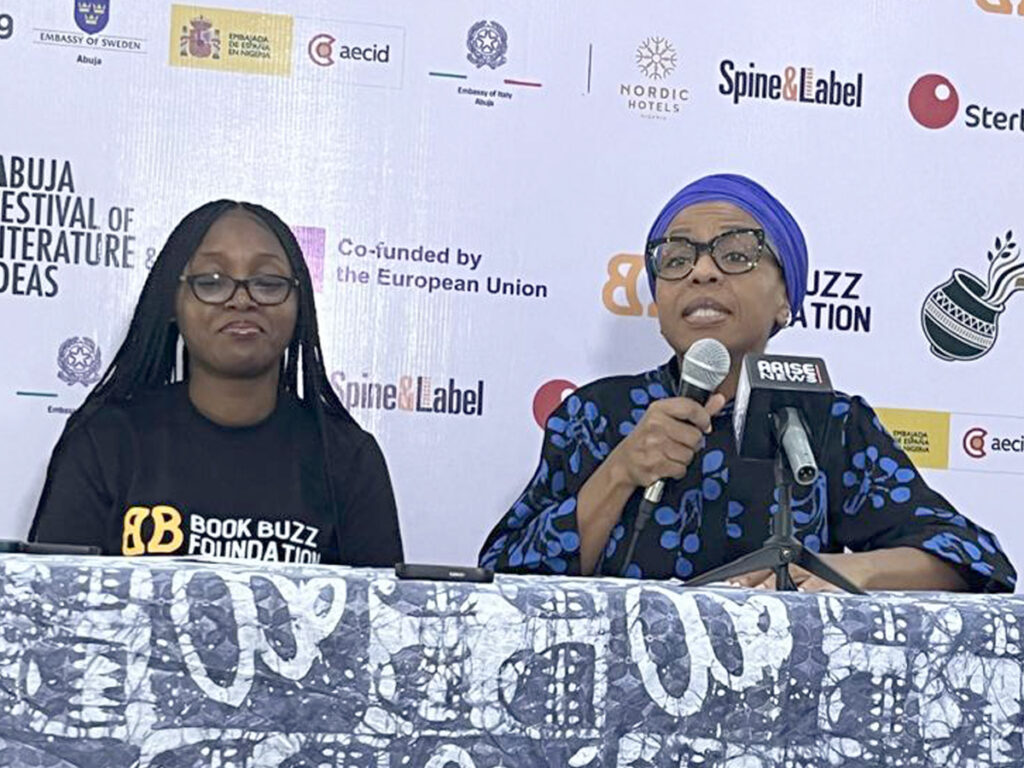
Shoneyin, who is the founder of the Book Buzz Foundation, is behind the inaugural Abuja Festival of Literature and Ideas (AFLI), scheduled for October 9 and 10, 2026, at Nordic Hotel, Abuja, where she hopes to create a platform that reflects how her own ideas about festivals have evolved.
“Every festival I curate is a festival of my dreams. That is because my dreams change all the time,” she said.
Shoneyin further said her interest in creating cultural spaces in Abuja dates back to Infusion, an event she organised before leaving the Federal Capital Territory (FCT) in 2012, which brought together artists, writers, and filmmakers for screenings, exhibitions, and conversations.
She recalled that the events often attracted large crowds, with some editions becoming so full that organisers had to turn people away. The experience, she said, convinced her that Abuja has an audience hungry for creative platforms and opportunities to engage directly with writers and artists.
In 2013, Shoneyin established the Book Buzz Foundation, which went on to organise the Ake Book and Arts Festival. She later became associated with the Kaduna Book and Arts Festival, known as KABAFEST.
She said the decision to create AFLI came after years of building a constituency of book lovers and cultural audiences, particularly as questions arose about the future of the Kaduna festival.
But Shoneyin stressed that AFLI was not intended to reproduce KABAFEST in Abuja.
“The flavour and texture of each festival is established from inception,” she said, explaining that the two festivals were created around different ambitions.
For AFLI, she said, the focus was on bringing together literature and ideas while giving audiences conversations that go beyond conventional literary programmes.
Shoneyin also said she pays close attention to how festivals are organised, from punctuality and logistics to audience movement and the overall structure of an event.
She wants Book Buzz’s festivals to demonstrate that Nigerian cultural events can be professionally organised and that younger organisers can learn from the process.
A major part of that approach, she said, is delegation. Members of her team have taken on responsibilities across different festivals and, through years of experience, have developed a strong understanding of event organisation.
“They know more about organising a festival than even me because they have their fingers on the pulse of what’s going on,” she added.
Shoneyin also said she does not regard other festival organisers as competitors and is willing to share her experience with people trying to establish new festivals across Nigeria and Africa.
“The more festivals exist, the better for all of us. I am not competitive in that way at all. The more, the merrier is truly what I mean,” she said.
She also said she offers advice to aspiring festival organisers without charging a fee and is open to discussing the practical realities of starting and running cultural events.
Her approach to AFLI also reflects her willingness to adapt, she said, as she considers audience demographics, attendance figures, ticketing patterns, and the changing interests of Nigerian audiences when planning festivals.
Beyond AFLI, Shoneyin is documenting her experience in a forthcoming nonfiction book, Festival Making Across Continents: Culture, Chaos, and Collective Joy, alongside other writing projects.
For now, she sees the Abuja festival as another opportunity to test new ideas, learn from the experience, and create a platform that can develop beyond its inaugural edition.