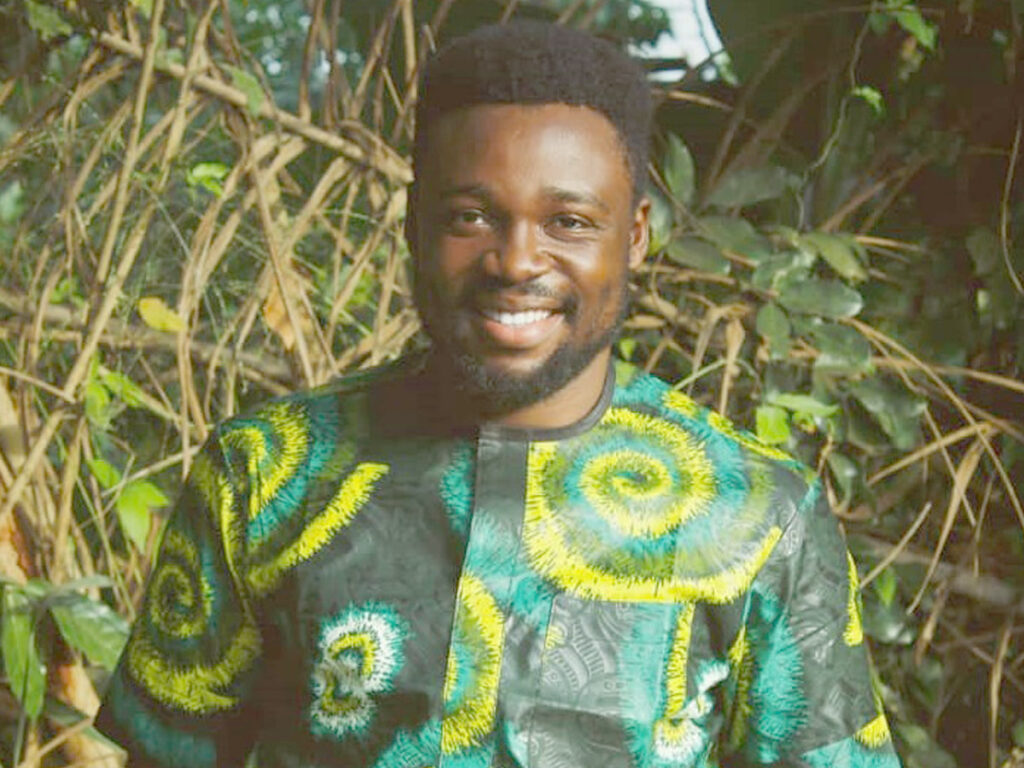

Leonard Ifeanyi Ugwu, Jr., a fellow of the Ebedi International Writers’ Residency, is a lecturer and researcher at the Institute of African Studies, University of Nigeria, Nsukka (UNN). He holds a PhD in International Relations and a postgraduate diploma in English and Literary Studies. His debut play, ‘Babel and Boys’, was published in 2023 by the Phoenix Award Books (PABPUB) and premiered at the University of Nigeria’s Arts Theatre on October 29 and 30, 2024, attracting over 1,000 attendees. Ugwu’s literary prowess extends to poetry, with the collections ‘Echoes of the Invisible’ (Published by AuthorHouse, USA, 2017) and ‘Echoes of Bullets’ (Published by Emotion Press, Ibadan, Nigeria, 2021), which was nominated for the 2024 Akachi Ezeigbo Prize for Literature. His literary prowess earned him the Best Poet of the Year awards in 2012 and 2013 respectively, from the Caritas University Literary and Arts Association. Leonard is a native of Nkalagu Obukpa in Igbo-Eze South Local Government Area of Enugu State. In this interview by SUMAILA ISAH UMAISHA, he speaks about Nigerian reading culture, the publishing industry, and his new publishing outfit.
How would you describe the reading culture in Nigeria, and how this affects writers and publishers?
Nigeria has a declining reading culture compared to the past in the country. The mid-19th to the 20th century was a rich period in Nigeria that developed timeless works and authors. Chinua Achebe, Wole Soyinka, Christopher Okigbo, Gabriel Okara, and others were at the forefront to proclaim the culture and norms of our people. During those times, they were popular and enjoyed a wide readership.
An abrupt transition to the digital age undermined the spirit of creative writing, and the videos, Nollywood, entertainment, and other distractions became popular. Even the print media has not gone spared — hardly are newspapers purchased by the Nigerians today. It is shocking that only one out of every one hundred people in Nigeria today reads a cumulative total of sixty-five thousand words, or the equivalent of a two-hundred-page novel.
The factors that lead to this decline are the advent of technology, audiobooks, e-books, inaccessibility of cheap books and libraries, high prices, poverty, and above all, an examination-oriented education system (reading is primarily to pass examinations). This bad culture of reading has drastic consequences on the writers and publishers, where writers are forced to resort to self-publishing and foreign opportunities. This influence pushes our best brains out of the nation, concentrating them in foreign countries.
Even worse, publishers are experiencing piracy, high production costs, and small markets where they can barely break even with local literary work. Because of this, a lot of bookstores and publishers have been relying on exam-oriented, recommended educational books to prosper. These elements smother local literary development, curtail a variety of voices and discourage investment in Nigerian narratives unless they have been able to achieve international recognition.
What is the prospect of creative writing in Nigeria, given the present efforts of both writers and publishers?
I fear that we shall have more idle writers in this country than ever. Due to the advent of artificial intelligence (AI), many authors are rising with false voices and writings that are not readily attractive or appealing to the human mind. It is sad.
However, as long as there are agencies and literature communities to run webinars, workshops, fellowships, and develop local voices, originality will flourish, and the cultural heritage of the nation will be enhanced. We hope so. I simply hope that such literary institutions promote literary festivals, book circles, mentorship, and other projects, as well as diaspora support.
And, as I keep on saying every time, we cannot have a better literary community without improved funding, anti-piracy campaigns, better institutions, and policies to revive reading. Unless these materialise in the immediate future, I fear many tragedies will descend on our intellectual power.
What would you say are the main roles of the writer, and his or her limitations generally?
The principal functions of the author in literature are complex and deep. First of all, the author serves as a mirror, a reflector of society, and an interpreter of its truths, contradictions, sorrows, and pains to create a sense of understanding and empathy. They record history, maintain the cultural memory, and speak the voice of the marginalised or the unsayable truths.
Authors inspire, disrupt conventions. They make people think, and point to moral and ethical reasoning — providing other viewpoints, challenging authority, and creating a vision of a more improved future. They are entertaining as they cast light on human experiences, arouse the imagination and encourage people to think critically.
In most perceptions, authors are the guardians of words and reality, as they ring bells on matters such as injustice or environmental degradation. They close gaps, create cultural identity, and impact social change by telling stories.
Nevertheless, authors are restricted. They are not all-knowing or always right. They are influenced by personal preferences, by cultures, by the lack of full knowledge, and may be misleading. Freedom of art has limits where writers should not encourage violence, propagate provable lies as true, nor disregard ethical obligations (e.g. hate speech). Examples of practical limits are financial crisis, small audience, censorship (in oppressive settings) and incapacity to impose or dictate change or interpretation. Writers do not determine the results, but they shape them, and the effect would depend on the interest of the readers. After all, as mighty as they are, writers are human beings who have to operate within subjectivity, social pressures, and within the boundaries of the language itself.
How would you describe the Nigerian publishing climate, and how does your new publishing outfit intend to intervene?
The Nigerian publishing climate has been making efforts to bring literature to the masses. Without publishers, bookstores, libraries, and books, our society would be relegated to mediocrity, and intellectual growth would be stagnant. Kudos to Nigerian publishers, both old and new, for keeping the intellectual spark alive. Despite how little and frustrating their results may be, these publishers keep the intellectual hope of our nation intact and renewed. So that, at least, Sodom may be spared.
On the contrary, Nigeria is blessed with many talented writers, especially from marginalised backgrounds, including the struggling street youth, ghetto survivors, and everyday heartbreak bearers who possess powerful, world-changing stories, but lack platforms to share them. Writing can be deeply therapeutic, yet these voices often remain unheard.
This is where our new outfit, The Literary Dungeon Publishers (launched just a week ago) intervenes. We aim to give voice to the voiceless with our slogan: ‘Rare, unseen, unknown, unheard’. We prioritise underrepresented, authentic narratives while remaining open to experimental genres from established writers. Our aim of “bringing literature to the elites” reflects our commitment to elevate exceptional and throbbing stories that liberate both the writer and the reader. We hope to fill this vacuum and set free so many troubled minds.
Sumaila Isah Umaisha has worked as a literary editor since 1994 with several media organisations, including Hotline Magazine, New Nigerian newspaper, and Blueprint newspaper, and later served as editor at Nigerian Newsday newspaper from 2013 to 2020. His work in literary journalism has earned him multiple awards, notably the Literary Journalist Prize of the Association of Nigerian Authors (ANA), which he won twice, in 2004 and 2007. His short stories, poems, essays, and interviews have appeared in numerous national and international journals, magazines, and anthologies, including Drumvoices Revue (USA) and The London Magazine. His first book, Hoodlums (2010), a collection of short stories, is a recommended text in several Nigerian universities. His novel Glasshouse (2022) was longlisted for the James Currey Prize for African Literature and shortlisted for the ANA Prose Prize in the same year. His recent works include the play Iburama (2023) and the novel Lost in the Wild (2024). He is the founder and coordinator of Authors’ Hub, a global writers’ collective dedicated to nurturing young writers and advancing literary development.