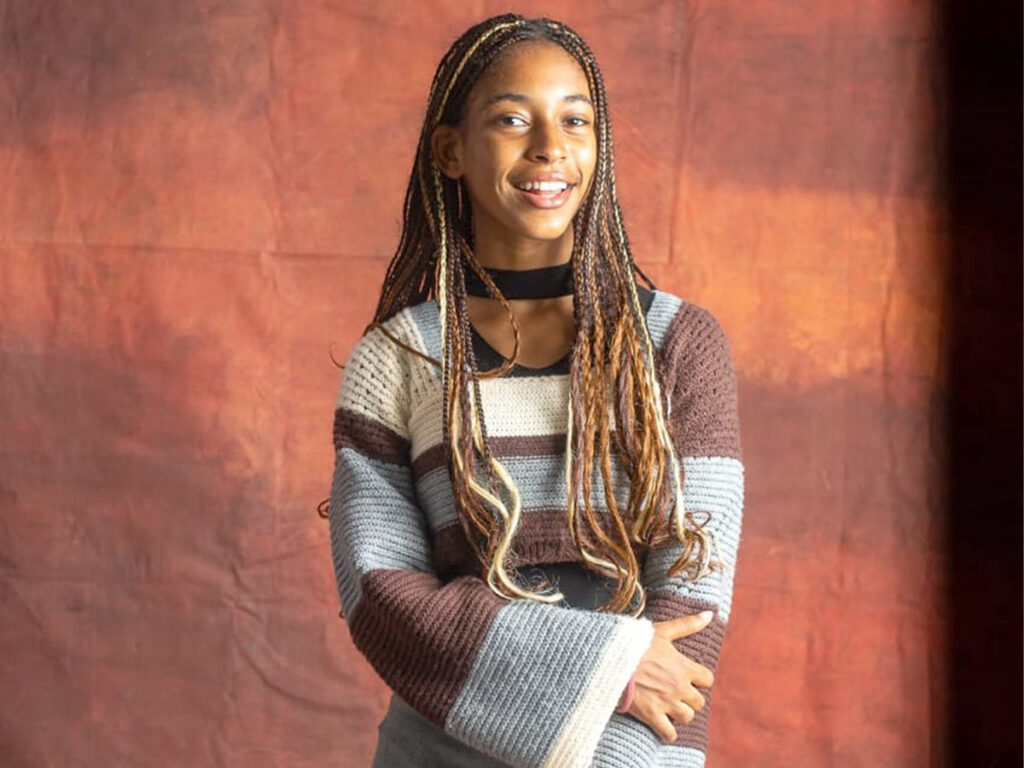

Amara Nwuneli is a Nigerian filmmaker, author, and climate activist committed to driving youth-led solutions to environmental challenges. She is the founder of Preserve Our Roots, a youth-driven initiative focused on climate education, environmental sustainability, and empowering young people to protect their communities and natural heritage. Through storytelling, advocacy, and creative media, Amara has used film and writing as powerful tools to raise awareness about climate change and environmental responsibility. She is an Earth Prize Scholar (2025) and a Hult Future Leader (2025), honours that recognise young innovators working to solve pressing global challenges. In this interview by GRATEFUL OGUNJEBE, she speaks about her work, film and book, and climate and social advocacies, among other issues.
What core problem were you determined to address when you founded Preserve Our Roots? How have you translated that vision into measurable impact?
I founded Preserve Our Roots because I was tired of watching climate change being treated like a distant theory in places where it is already a daily emergency. In Lagos, climate change is not a future scenario. It is a street turning into a river. It is a school being rebuilt after flooding. It is a child learning to normalise loss. It is a waste piled so high that it becomes part of the landscape. It is heat that steals concentration, sleep, and peace.
The deeper problem was always power. Who gets protected? Who gets displaced? Who gets listened to? Who gets told they are “too young” to speak, while living through disasters created by decisions they never got to vote on?
Preserve Our Roots began as a refusal to let young people in Nigeria inherit disaster quietly. We translated that vision into impact through workshops, campaigns, community activations, relief drives, and the creation of tangible spaces that make sustainability feel real. We track impact through the number of youth engaged, the programmes delivered, volunteer mobilisation, and the physical transformation of public spaces. We also measure impact in the ways you cannot always graph — the student who becomes the first climate advocate in their school, the neighbourhood that begins to see waste as material, the community leader who starts to believe young people can be trusted with real responsibility.
Which initiative best demonstrates your organisation’s contribution to climate action and youth mobilisation?
The initiative that best demonstrates our contribution is the G.R.E.E.N. Sustainability Pilot Park. It is not symbolic. It is a built response to urban neglect. It is recycled materials turned into infrastructure. It is education turned into a public space. It is youth-led labour turned into something children can climb on, learn from, and grow around. It is the kind of climate work that doesn’t ask communities to wait for salvation. And it carries the heart of Preserve Our Roots: climate action that looks like people.
What strategic steps enabled your transition from grassroots activism to global platforms, such as COP28 and the White House?
I didn’t “transition” from grassroots activism. I brought it with me. The strategic steps were not about leaving the community behind. They were about refusing to let global spaces talk about my people without my people’s stories, data, and demands in the room.
I documented everything. I learned how to translate local work into language institutions understand — impact metrics, theory of change, stakeholder mapping, policy framing. I built partnerships carefully. I joined networks where youth leadership was taken seriously, including YOUNGO. I pursued fellowships that sharpened my ability to move between worlds: the world of flooded streets and the world of conference halls.
Which international engagement most affirmed the relevance of your work? And how have these experiences strengthened climate advocacy and youth participation in Nigeria?
What affirmed the relevance of my work most was seeing how quickly people from other countries recognised Lagos in their own homes. A young activist from another coastal city describing their own flood season. A policymaker reacting to our park model as a replicable form of climate resilience. A fellow youth leader telling me, “This is what climate action is supposed to look like.”
Those moments confirmed something I have always believed — our communities have been innovating under pressure for decades. The world is only now learning to listen. These experiences strengthened climate advocacy in Nigeria because they helped me build credibility that opens doors for other youth. When one young person is invited into a room, it can become a crack in the wall.
I have used those openings to push for youth representation in policy discussions, to validate grassroots strategies, and to show young Nigerians that climate advocacy is not a performance. It is governance. It is planning. It is power. And, it is a story. When you bring the story of a community into a global room, you make it harder for people to pretend they do not understand what is at stake.
What inspired the creation of your documentary The Heat of Change?
The Heat of Change came from anger and love. Anger, because I was watching climate disaster become framed as an unfortunate inconvenience, while communities were losing their homes, schools, safety, and dignity. Love, because I know the resilience of Lagos intimately. I know how people rebuild with bare hands and stubborn hope. I know how humour survives even in crisis. I know how young people carry their families emotionally while still being called “children.” I made the film because I needed the world to see what I was seeing. I needed Nigerians to hear ourselves clearly. I needed climate justice to stop being a slogan and start being a mirror.
Beyond audience reach, how did you evaluate its social or policy impact? What tangible conversations, actions, or shifts did the film help to initiate?
Beyond audience reach, I evaluated impact through what the film moved in people. The conversations started in schools. The way it shifted how students talked about flooding, waste, and governance. The invitations to speak where the film became a shared reference point. The moments when a screening turned into a planning session, when youth left the room with the urgency to organise. The tangible shift was in the language people began using. They stopped speaking about flooding as “bad weather.” They started naming the real causes: drainage, corruption, sand-filling, deforestation, neglect. They started asking different questions. They started demanding different answers.
That is the power of documentary. It does not just inform. It rearranges what people believe is normal.
How have your films contributed to public understanding of climate justice, corruption, and inequality? What does this say about the role of creative media in driving social change?
My films exist because I do not believe data alone can carry grief. I care deeply about policy. I care about systems. I care about measurable outcomes. I also know that people move when something reaches their humanity. When they see themselves. When they see their neighbours. When they see what they have been taught to ignore. My work uses film to expose the invisible architecture of inequality — who lives near the dumps, who lives near the parks, who has drainage, who has generators, who can evacuate, who cannot. It connects climate breakdown to corruption in a way that is concrete and undeniable. It shows how injustice is built into the design of a city.
In education, my films have become entry points. Students who felt overwhelmed by climate science suddenly feel capable of talking about climate justice. Community groups use the stories to start local action. Adults who dismissed youth activism begin to take it seriously because they see youth creating knowledge, not just noise.
Creative media does something that is hard to replicate. It holds complexity without losing people. It gives language to what communities already feel. It makes it harder for institutions to hide behind vague statements. It also makes young people feel less alone. And that is how change begins.
Through your success at the Hult International Business Competition, how did you demonstrate that sustainability and profitability can coexist? How has this achievement influenced perceptions of ethical business among young innovators?
At Hult, I brought the same mindset I bring to climate work — solutions must survive outside the pitch deck. Our success came from proving that sustainability can be built into the logic of a business model. Not as decoration. Not as a feel-good paragraph at the end. Built into how value is created, who benefits, how resources circulate, and how communities are engaged.
That experience influenced young innovators because it made the conversation sharper. People stopped asking, “Is ethical business possible?” and started asking, “How do we design it well?” It also reminded people that in places like Nigeria, sustainability is often survival. It is not a luxury. It is not an aesthetic. The broader lesson for climate entrepreneurship is that the strongest ideas are rooted in lived reality. When your model comes from communities, it has endurance. When your model comes from extractive thinking, it collapses the moment the grant ends.
I want climate entrepreneurship to look like ownership, dignity, and long-term systems change. I want it to look like the Global South setting the agenda, not begging to be included in it.
What societal challenge did your Earth Prize–winning project seek to resolve? How does the project move climate ideas from theory into scalable, real-world solutions? Why is this achievement significant for youth-led innovation across Africa?
The Earth Prize project was born from a problem I have lived with my whole life: waste as a symptom of deeper abandonment.
In many West African cities, waste management is framed as a technical issue. People speak about it like a logistics glitch. The truth is heavier. Waste becomes visible where the government has decided certain communities are disposable. Our project confronted that reality by treating waste as both material and message. Material for circular solutions. A message about whose lives are valued.
We moved climate ideas into real-world practice by creating systems young people could actually run with. Sorting. Repurposing. Building. Teaching. Tracking. Replicating. We developed pathways that did not depend on perfect infrastructure, because perfect infrastructure is not the reality for many African cities. This achievement matters because it proves that youth innovation in Africa is not hypothetical. It is already happening. Young people are not waiting to be “included.” We are designing. And we are doing it while carrying the weight of restrictions, underfunding, and global narratives that underestimate us.
With your book, For We Are Curious, what societal gaps or silenced narratives were you aiming to address? How has the book contributed to youth consciousness, curiosity, or civic engagement? What feedback best reflects its impact on readers?
I wrote For We Are Curious because I grew up seeing how curiosity was punished. In many spaces, young people are trained to obey. To stay quiet. To accept what they are told. In Nigeria, curiosity can be treated as disrespect. In the diaspora, curiosity can be treated as an inconvenience. Either way, it becomes something you learn to hide.
The book was my way of giving young people permission to ask the questions we were taught to swallow. Questions about power. About history. About identity. About why the world is built the way it is.
The impact has shown up in the most meaningful ways — young people telling me they started writing, organising, speaking up in class, or questioning what they had always assumed. Teachers telling me the book helped students discuss civic issues without fear. Readers telling me they felt less alone. The feedback that stays with me most is when a young person says, “I thought I was too much. Now I think I’m necessary.”
That is the purpose of the book. To keep the fire alive.
How have your policy fellowships shaped your ability to influence climate and development discourse? What policy contributions have you made that reflect the lived realities of young people?
Policy fellowships gave me tools to match my instincts. I have always understood climate injustice from experience. From displacement. From flooding. From watching neighborhoods been treated as collateral damage. Policy training helped me translate those realities into frameworks that decision-makers are forced to engage with.
I learned how policy is made, how it fails, and how it can be shaped. I learned how to evaluate solutions ethically, how to write briefs that do not flatten communities, and how to build arguments grounded in both data and lived experience. My policy contributions centre on climate-resilient infrastructure, urban neglect, and the need for community-led adaptation.
Why is youth participation essential to building effective and inclusive climate policy?
I have also advocated for youth participation beyond symbolism. Youth are often invited to speak and then excluded from decision-making. I have pushed for youth involvement in planning, implementation, and monitoring.
Youth participation is essential because we are living the consequences now. We also bring something that many systems lack: imagination. We can see the future clearly because we are the ones who have to survive it.
What has your involvement with Ashoka, Civics Unplugged, and YOUNGO enabled at a systemic level? How have these platforms expanded the reach and credibility of your work? Which collaboration best illustrates collective impact over individual advocacy?
These platforms have helped me build power without losing my grounding. Ashoka affirmed that youth leadership can be trusted with real responsibility. Civics Unplugged sharpened my ability to organise across different platforms and build civic strategy. YOUNGO connected my work to global climate governance, giving me access to networks where youth influence is translated into formal advocacy.
Systemically, these platforms expanded the reach of Preserve Our Roots by validating our work to funders, institutions, and government actors who might otherwise dismiss a youth-led organisation. They also gave me community. People who understand the stakes, who are not intimidated by the scale of the problem, who are committed to collective action. The collaboration that best illustrates collective impact is the work done through youth networks at climate conferences, where multiple organisations push shared demands, share research, and coordinate strategy. That collective force changes the tone of the room. It makes youth advocacy harder to ignore. And, it reminds me that I am part of something larger than my own story.
At this stage of your journey, how do you define success beyond personal milestones? Which achievement best demonstrates lasting societal value?
Success for me looks like systems that continue when I am tired. It looks like youth in Lagos building climate solutions without waiting for permission. It looks like community spaces that remain cared for, protected, and loved. It looks like policy shaped by the people it affects. It looks like young Nigerians believing their country belongs to them, even when the world tells them otherwise.
The achievement that best demonstrates lasting societal value is the sustainability park model and the community-driven approach behind it. It is an infrastructure built with community, not imposed on community. It is education that lives in a place children can touch. It is a blueprint for what public space can look like in cities that have been deprived of it.
What long-term change do you hope your work will leave within climate advocacy, storytelling, and youth leadership?
Long-term, I want my work to leave behind a new expectation. That climate advocacy in Africa is not charity work. That storytelling is not soft. That youth leadership is not decorative. I want young people to inherit a world where their voices are treated as necessary expertise. I want Nigeria to inherit leaders who understand that development without justice is just another form of violence. And I want our stories to survive, in our own words, with our full dignity intact.