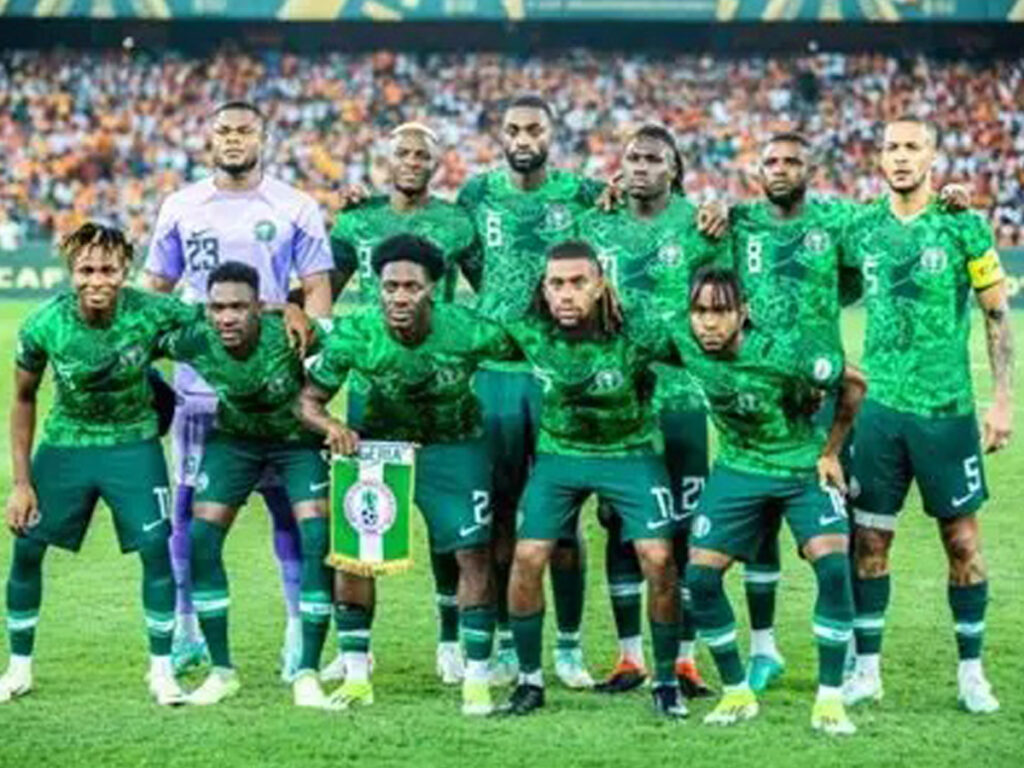

The Democratic Republic of Congo (DR Congo) football federation has cautioned Nigeria against attempting to secure a place in the 2026 FIFA World Cup through administrative appeals after losing to the Leopards in the intercontinental playoff.
The warning came in response to a formal petition filed by the Nigeria Football Federation (NFF), challenging the eligibility of several DR Congo players in the decisive playoff match held in Morocco.
The playoff ended in a dramatic 4–3 penalty shootout, denying Nigeria’s progression in the intercontinental qualifiers.
In its response, DR Congo’s national team, via an official post on its social media platforms, urged the Super Eagles not to seek “backdoor” qualification, insisting that the World Cup should be contested with integrity rather than legal manoeuvres.
“If you can’t win on the pitch, don’t try to win from the back door. The World Cup must be played with dignity and confidence, not with legal tricks,” the federation stated.
The NFF’s petition centres on claims that between six and nine DR Congo players who switched national allegiances may not have fully complied with the country’s domestic nationality laws.
Congolese legislation does not permit dual citizenship, but some players reportedly retained citizenship of their previous countries, including European nations. While FIFA cleared the players based on possession of valid DR Congo passports, the Nigerian federation contends that the process misrepresented the players’ compliance with domestic law.
Dr Mohammed Sanusi, NFF General Secretary, explained that FIFA operates primarily on documentation submitted by member associations and is not responsible for enforcing national citizenship laws.
“Our concern is that FIFA was deceived into clearing these players. The process was fraudulent, and that is what our petition seeks to address,” he said.
The NFF has reportedly submitted all relevant legal documents to FIFA to support its claims.
DR Congo, meanwhile, has publicly defended the eligibility of its players. In addition to social media posts, the Congo federation released images from FIFA’s Change of Association platform, showing dates when key players, including Aaron Wan-Bissaka, officially switched allegiance to DR Congo.
The federation also highlighted engagements between these players and DR Congo’s President, Felix Tshisekedi, to underscore the legitimacy of their nationality change.
The dispute has reignited hope among Nigerian football fans who have seen their national team miss consecutive World Cups, having failed to qualify for the 2022 edition in Qatar. Nigeria last appeared in the World Cup in 2018 and aims to secure a return for the 2026 tournament. The NFF’s petition, if successful, could potentially alter the outcome of the playoff or trigger further FIFA review.
DR Congo, which has only qualified for the FIFA World Cup once, in 1974 as Zaire, is set to advance in the intercontinental playoffs. The Leopards have received a bye into the final round, where they are scheduled to face the winner of the semi-final between New Caledonia and Jamaica.
The country’s football federation has insisted that all players meet FIFA’s eligibility standards, dismissing Nigeria’s allegations as an attempt to overturn the on-field result through legal and administrative channels.
The unfolding situation illustrates the complex interplay between national laws and FIFA regulations regarding player nationality, highlighting potential gaps in oversight when players change allegiance.
Both federations are expected to maintain close correspondence with FIFA in the coming weeks as the 2026 World Cup qualifiers progress.