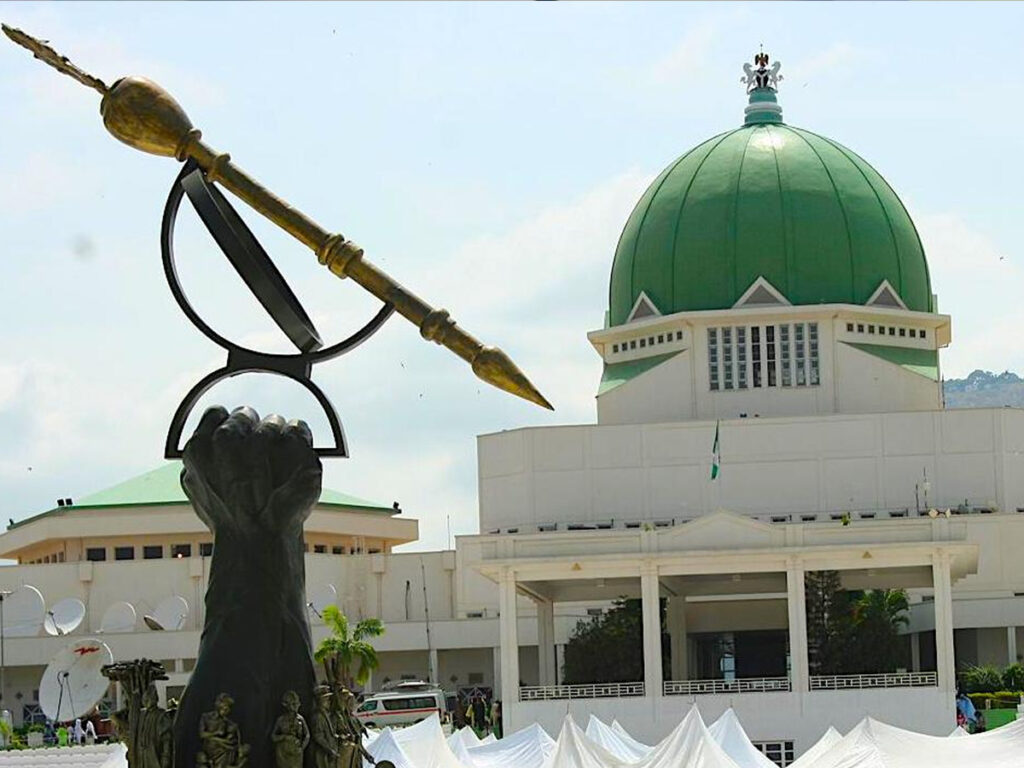

Tension gripped the National Assembly complex in Abuja on Wednesday as a group of contractors barricaded both the main entrance and exit gates of the legislature, protesting the Federal Government’s failure to settle outstanding payments for completed projects.
The protest, which paralysed movement within the Three Arms Zone, caused hours of gridlock and left lawmakers, staff, and visitors stranded, while security personnel struggled to restore order.
Operating under the banner of the All Indigenous Contractors Association of Nigeria (AICAN), the demonstrators claimed they were being owed billions of naira for federal and constituency projects that had long been executed and, in some cases, inaugurated.
Deputy Speaker Benjamin Kalu, who chaired Wednesday’s plenary, was compelled to suspend proceedings and move a motion for the House to go into a closed-door session at exactly 12:02 p.m. The three-hour meeting, according to sources, focused largely on resolving the contractors’ grievances and finding a lasting solution to the payment dispute.
Wednesday’s protest marked another phase in a series of demonstrations by indigenous contractors over unpaid debts said to total about ₦760 billion. On November 4, 2025, the same group had besieged the National Assembly, accusing both the legislature and the Ministry of Finance of failing to fulfil earlier promises to release funds for verified payments.
During that earlier protest, AICAN President, Jackson Ifeanyi Nwoss, told journalists that the contractors had met with the leadership of the National Assembly on 21 October 2025 and were informed that funds for the payments had been released by the Federal Ministry of Finance. He claimed, however, that bureaucratic bottlenecks and alleged interference by certain officials had stalled disbursement.
The group vowed to continue its demonstration until the government honoured its financial obligations. They accused ministries, departments, and agencies (MDAs) of frustrating small and medium-scale contractors, despite the government’s pledge to promote local participation in public procurement.
Nwoss said that many of the affected members had taken loans to execute their contracts and were now facing bankruptcy, adding that “no government can claim to empower local contractors when those who have delivered projects are left unpaid for years.”
The lawmakers passed a resolution mandating the Minister of Finance, Minister of Budget and National Planning, and the Accountant-General of the Federation to ensure immediate release of funds for the settlement of verified debts within seven days.
The motion, sponsored by members concerned about the growing unrest, warned that continued delay could further cripple small businesses and undermine public confidence in government contracts. The House also directed its Committees on Public Procurement and Works to engage the executive for verification of claims and report back for further legislative action.
By evening, movement was gradually restored after the contractors temporarily lifted the blockade, but they warned that they would return if their demands were not met. They insisted they will maintain pressure until concrete payments begin, while the House of Representatives has pledged to follow up on the matter with the executive arm.