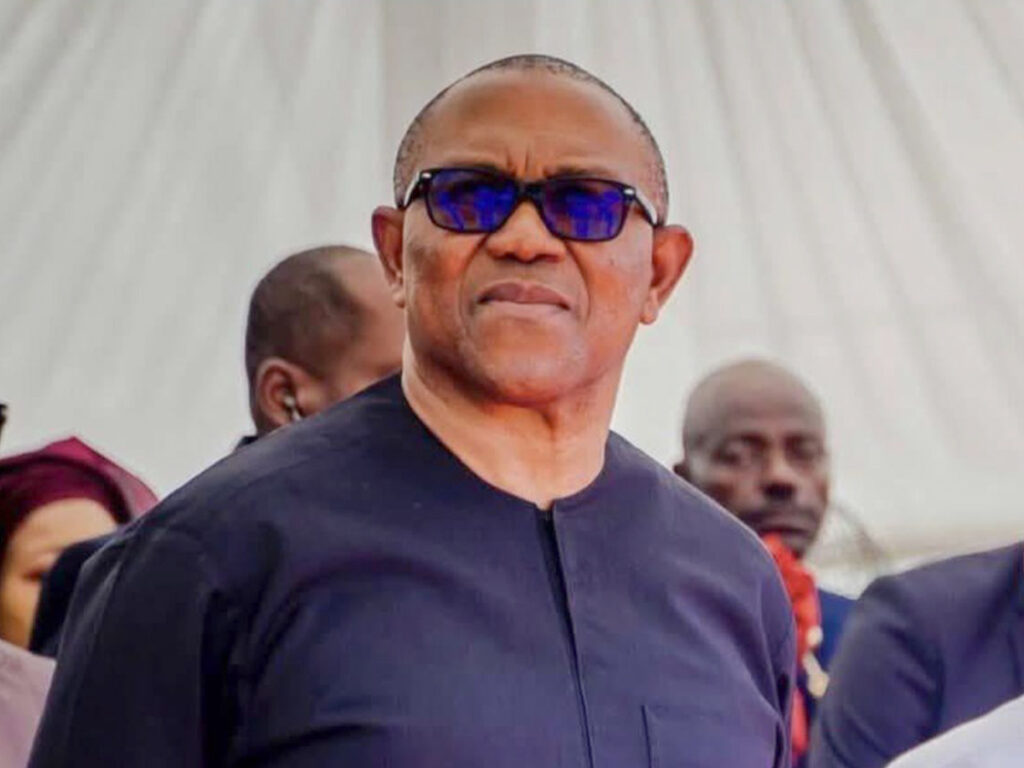

Former Ekiti State Governor Ayodele Fayose has said Peter Obi weakened his chances of winning the 2027 presidential election when he left the African Democratic Congress (ADC) for the Nigeria Democratic Congress (NDC), arguing that the move further divided the opposition and reduced its ability to mount a strong challenge against the ruling All Progressives Congress (APC).
Fayose said this during an interview on TVC News’ Politics Tonight on Tuesday while discussing the prospects of opposition parties ahead of the 2027 general elections.
He said opposition politicians had stronger electoral prospects when they were united under the ADC, but their subsequent departure from the platform had undermined the possibility of presenting a common front.
“When they were all together in ADC, I would tell anybody that they would make an impact. The day Obi left ADC for NDC, that day Obi lost,” Fayose said, stressing that continued division among opposition politicians would make it difficult for them to defeat the APC.
Despite his criticism, Fayose described Obi, the Labour Party’s 2023 presidential candidate and a prominent opposition figure, as “a fantastic Nigerian” who had demonstrated that positive change was possible.
However, he maintained that Obi’s political prospects would continue to suffer if opposition forces failed to work together.
“But when opposition, when they don’t come together, they will continue to lose,” the former governor said, arguing that the opportunity for the opposition to reverse its current political direction had become limited because the electoral process had already advanced.
Fayose said that the Independent National Electoral Commission (INEC) had accredited the candidates, making it difficult for politicians who had already entered the process to withdraw and reorganise their political arrangements.
“It’s too late now. INEC has accredited everybody. Even if you say you are not doing again, you’re on your own. You have put your feet in the water. You can’t get out. You have gotten wet already,” Fayose said.
On President Bola Tinubu’s prospects in the 2027 election, Fayose said the political calculations in the South-West currently favoured the president, particularly because of the backing of influential political figures in the region.
He projected that Tinubu could secure close to four million votes across the South-West, based on the voting pattern recorded during the 2023 presidential election.
He further predicted that Tinubu could win the 2027 presidential election with about 65 per cent of the vote, citing the pattern of the previous election as the basis for his assessment.
Fayose also addressed allegations of electoral malpractice during the recent Osun governorship election, rejecting claims that vote-buying was attributable to only one political camp. He said supporters of the All Progressives Congress, Peoples Democratic Party, and the Accord Party were all implicated in the alleged distribution of money.
“It’s mere desperation. Mere desperation,” Fayose said, adding that television footage from the election showed police arresting people from opposing political camps allegedly involved in sharing money.
He argued that electoral malpractice was not the responsibility of one party alone but reflected a wider systemic problem requiring action from both politicians and voters.
“We have a lot to put right,” Fayose said, describing electoral malpractice as “systemic” and a problem that must be collectively addressed.